Showing posts with label sins. Show all posts

Thursday, 7 March 2013

The Final Four Sins

Continuing the account of diabolic temptation ...

4. Gluttony.
The concept: Six imp chefs, cooks and butlers throw dangerous and tasty food at the party and the penitent, trying to get everyone to succumb to gluttony, using their powers of suggestion (once per day).
The execution: Three "courses" were served.

  • The first was stew, siphoned through a hose from the imp's cauldron to the party's convenient defensive ditch. If you gave in and ate the stew, you were incapacitated for a round, then make a Body save in order to vomit or be further incapacitated while the stew was in you. 
  • This was followed by the imps hurling animated cuts of meat - serpentine sausages, geese and fowl, legs and hams, racks and roasts and livers and a nasty haggis. The meat tried to get in your mouth and choke you, or make its way past you to tempt the by now two-days-fasting penitent. 
  • The dessert was brought over the party on a huge tray by invisible imps. Breaking the fourth wall, I described just about every sweet and piece of junk food the Band of Iron's players had consumed over the past year. There was nothing sinister about the dish; the imps were just trying to upend it over the penitent for more gluttony temptation.

The verdict: This was a funny episode but I didn't feel that the party was that threatened by it. In hindsight this should have been mostly about throwing suggestions on the hungry penitent and trying to get the food past the wall of bodyguards. The imps went down quickly in combat.

5. Lust. 
The concept: This was a lone succubus. Hell didn't throw their all into this one because the penitent had pretty much had it with women.
We got gonzo here.
The execution: I worked the epicene incubus/ succubus for camp, having it deliver cruel Freudian analyses of the player characters - who had mostly been lustless in the campaign, turning down opportunities for romance - before settling on the henchwoman Lintilla, who, shall we say, had not been without lust in the campaign. The party quickly shielded her from the succubus' charm ability and engaged it with missiles and melee before it could use its suggestion spell. A mighty lightning bolt from the cleric's magic amulet sent it reeling, and swords and silver arrows did the rest. On being sent hellwards, the creature briefly showed its true form: rather than a fabulous Aubrey Beardsley androgynous fashion model, the succubus was just an ordinary, plump, bright red Coop hot rod devil girl.
The verdict: Probably, getting hit shouldn't forestall monsters' spell-like abilities. Could have been tougher.

6. Sloth.
The concept: Three wraiths attack. Instead of draining levels, they drain movement points equal to the damage caused (d6). At less than 3 move, you cannot attack and at 0 move, you fall asleep.
The execution: Pretty straightforward, slug-em-out.
The verdict: This one created some tension, with party members dropping out in rough proportion to the wraiths dispatched. I put it last - a move the players anticipated - following the setting logic that people would be more tired at the end of the last night, rather than doing what was strategically right, and putting them in the lineup at a position where they could take out party members in preparation for other sins.

7. Pride.
As drawn by Crumb.
The concept: The temptation is not over with the cock's crow. The morning comes and the Son of the Morning sends his last best hope from another dimension - a certain blues musician who sold his soul to the Devil, at the crossroads, at midnight, so he could play guitar and sing like nobody else.
The execution: A strangely dressed, dark-skinned man with an odd musical instrument comes down the road from the west, singing this song (which I actually put on in the session). He is not unholy, or magical, or a devil; just a mortal trying to pay off the mortgage on his soul, and there will surely be trouble if he is struck or killed. The musician humbly approaches and congratulates the party on their victory, asking them what kinds of rewards they expect. He is really aiming at the NPC penitent, suggesting that some kind of acclaim and sainthood are in the offing for having resisted the three nights. This is entirely a psychological challenge, and the party must show humility and encourage the penitent to do the same, or all is lost at the last moment.
The verdict: One of my players fell for it, mainly out of wanting the blues singer to be the good guy. Another nailed the challenge, and all it took was one. This wise fellow denied all credit, offering praise instead to the saints and Creator. Everyone else followed suit, and Mr. Johnson graciously took his leave, marking the true end of the ordeal.

Anyway ... wait until May and you'll hopefully see if I can pack all of this into one page.

Wednesday, 6 March 2013

The First Three Sins


Continuing the account of how I tried to tempt players, characters, and NPCs on the last two Nights of the Devil ... the tale of Night the First.

1. Wrath.
The concept: Three erinyes, each armed with seven magic arrows of Wrath (Mind save or charge out to attack them), circle and shoot at the party. They at first used their illusion to masquerade as tempting ex-lovers of the penitent Diarmuid, but this was not done to excite his Lust, but his Wrath - right now he was feeling nothing but rage at the evil fay who had charmed him for year on year and drained over half his hit points.
The execution: As it turned out, the magic of the arrows did not exactly overwhelm the characters; only a couple of party members got hit once they got behind cover, and these were easily enough restrained. But the players! One of them got really, really mad at the whole situation - just taking incoming fire, not going to do a thing about it, not knowing if the DM had just set up a certain slow death situation! After cooler heads decided to stick it out some more, the erinyes ran out of arrows, fired a final salvo of the party's own shot arrows, and departed.
The verdict: Worked great as a player temptation. Magic arrows almost not necessary.

2. Avarice.
The concept: Seven bearded devils with magic sacks throw treasure at the party trying to get them to pick it up. For each one who succumbs to avarice, a devil may enter the magic circle and attack.
The execution: In practice this temptation was pretty obvious, so I had to step it up with numerous waves of treasure. Soon enough, the devils were throwing crowns that tried to land on people's heads, and snaky gold chains that dragged away pieces of equipment if they hit you. The last trick was for the bags to call out a large portion of coins from each character's purse. Now that hit them where they live! The self-same player who had succumbed to wrath now made to stomp on a fleeing gold piece, and thereby admitted one devil into the circle. The party defeated it in more or less short order, and the "temptation" paid off as that devil's sack, containing his stolen gold, got left behind ...
The verdict: Another great way to get under the skin of the players ... they're used to steering clear of treasure that looks to good to be true, but their materialism really shows when you start to take their stuff. I made all the treasure fake, but in hindsight it should have been real.

3. Envy.
The concept: Sixteen threads of ghostly, whispering letters, two for each person in the circle, come snaking in. If they get in your ear and you fail a save, they whisper envious words and make you attack another party member you have cause to envy.
The execution: Magic and silver weapons could fray and disperse the threads, but soon enough a large number of them were in threat range. A henchman and the dwarf succumbed. Cold holy water in the face allowed a repeat save, and the henchman rallied, but the dwarf did not, and he rushed and pummeled the lower-level fighter PC to whom the holy knights had given the devil-slaying sword, that cheesy noob! The brawling rules got a workout as the two ended up in the defensive ditch they'd dug.
The verdict: The actual challenge was not the toughest, but not knowing what the threads were and seeing them come from all sides made for a frightening experience, as did the possibility of turning the party against itself. I only later thought that maybe the players could be induced to feel envy if the threads redistributed experience points from one character to the other ... but how this feeling would lead to the characters committing the sin, exactly, remains to be seen.

I was also prepared for player skill to help break the threads - anyone who tried to think of ways their character was great, all right and really okay would resist them without a save. Maybe because the encounter played out as a combat rather than psychological challenge, this didn't occur to anyone.

Next: the final night and its four sins.

Tuesday, 5 March 2013

The Devil's Acre: Temptation

How do you represent spiritual temptation in an adventure game?

Well, you could play Pendragon RPG, a system that explicitly rates each character's vulnerability to different character flaws and passions. A Pendragon knight beset by an unearthly vision of lust would roll a 20-sided die, check his character sheet, and either succeed or succumb. In service of a more picaresque story, a Dying Earth RPG character might be overcome by a persuasive flourish and be compelled sit down at the gambling table with a known master swindler.

Temptation is part of those games' moral mechanics. It's not part of most other games, though. You may have alignment, or resistance to mental influence, but nothing stops the characters from making choices like perfect Puritanical optimizers, every day of the week. Except maybe under "carousing for experience" rules, which kind of proves the point.


As I threw wave after wave of diabolical tempters at the party on the last two nights of their ordeal, defending the praying penitent in the Devil's Acre, a number of options arose:

1. Have the tempters target the NPC penitent; the PCs have to stop them from getting into range and distracting the penitent, and the tempters will fight to get close. If the blockade fails, then being an NPC, the penitent has to make some kind of save or check against the temptation.

Um, yeah, just like that.
2. Have the tempters target the PCs, trying to pull them away from the penitent or claim them as prizes in their own right. "You succumb to lust unless you save" doesn't seem quite right, but magical temptation does lie with in the rules of the traditional adventure game, as a spell-like effect. And, what do you know, quite a few devils as written come with charm and suggestion effects.

3. Note the past behavior of the PCs and their allies, and use this to direct the efforts and outcome of strategy #2. It's not a matter of rolling a die, but of having raided a merchant ship for its treasure four sessions ago, so Avarice already has its claws in you. This makes the most sense if sin pays in your campaign, at least temporarily; for example, if spending gold on carousing nets you more experience points than donating it safely to a church does.

4. Target the players. I need to explain this some.

In the past here, I've argued for drawing on the concerns and tendencies of the players themselves to stand in for such traits in their characters as alignment and morale. Obviously, this won't always work. Some of these theological sins refer to the satiation of bodily needs: lust and gluttony in particular. All right, there were some pretty delicious chocolate and banana cakes on the table at our session, and I could have worked them in somehow ... but yeah, and then lust, no, yeah, forget it.

Other of the theological sins, however, serve the needs of the ego, the little character we all build for ourselves. I don't care if you don't play D&D. You are still walking around with a "character sheet" in your head, with some idea of your skills and abilities, where you fit in the hierarchy of things (level) and what road you walk in life is (class). It's part of the undying psychological appeal of role-playing - to create a character on paper more free, more disciplined, more interesting, more dramatic, than the one in your skin. But when you role-play, the two egos become one, as you defend the interests and dignity of your character.

With these other sins, to attack the character is to attack the player, whose ego is the character's ego. Wrath? Touch upon the player's need to avenge harm done. Avarice? Throw loot at the player - or better yet, threaten to take it away. Envy? Make the player feel unfairly disadvantaged; take away some experience points and give it to the next guy. Pride? It's what makes them go "Let me tell you about my character..." Work with it.

All right. In the actual Devil's Acre session, some of these ploys worked better than other. Next post: a play-by-play of the seven-round knockout the Band of Iron dealt the Prince of Darkness.

Tuesday, 1 November 2011

Liches: Superbia

Closing out the season of sinful undead, we awake from Samhain revels to find the biggest undead, liches, and the biggest sin of all - the original sin of Adam, Eve and Satan - pride. "Ye shall be as gods."

"Lich" is an old Anglo-Saxon word meaning "corpse," and the transition to a gaming creature seems to have been through the writings of Clark Ashton Smith and other pulp scriveners who resurrected the hoary term to describe the sorcerous, shriveled walking dead.

coolminiornot.com
As Von noted way back when I started this series, liches fit the bill of the free-willed undead best, because they are the only ones to explicitly and always choose their condition. Their aspiration to immortality and godlike power itself have earned them the sin of superbia, pride. One might imagine that because they have reached their undead state through arcane sorceries, they have found a way to transfer their consciousness beyond the theological soul. They are therefore an unparalleled threat to divine justice; when destroyed, they merely cease to exist, and their sins will go unpunished.

How does the lich get that way?  Following the idea of the lich as magical cyborg, it endures a seven-step ritual of replacing the parts of its spirit and soul with sorcery. It's possible to meet with a wizard at one stage or another of this transformation, a true fractional lich (as opposed to the curiously named demilich, actually more powerful than a full lich). These horrible rituals include self-mutilation, trepanation, and worse...

1. The wizard gives up the eyes, the windows of the soul, replacing them with icy burning sockets having full-spectrum vision to 120'.
2. The wizard gives up the breath, the door of the soul, replacing it with a magical voice that causes fear as a full-blown lich does.
3. The wizard gives up the brain lobe of Memory, the treasury of the soul, replacing it with a gem containing an intangible and infinitesimally compact library of lore. This ensures that the lich will retain super-genius intelligence and spell knowledge without the need to consult books.
4. The wizard gives up the brain lobe of Reason, the throne of the soul, replacing it with another gem containing a distillation of the wizard's own methods and rationality. This gives absolute self-control and resistance to enfeeblement, polymorph, and insanity.
5. The wizard gives up the brain lobe of Instinct, the foundation of the soul, sacrificing it utterly. This gives resistance to charm and sleep, and indeed freedom from all desires save those for knowledge, power, and the suffering of others.
6.The wizard gives up his or her soul, replacing positive energy with chill negative, and gaining the paralyzing touch ability, death magic immunity, or possibly even more dreadful powers of the Negative Planes.
7. Finally, the wizard surrenders his or her life, and the body begins to decay, replacing magic-user levels, hit points, and other stats with monster hit dice and stats, and acquiring the remaining resistances.

A contradiction in the lich-as-written may also contain the key to turning it. How does the lich's pride and vanity square with its appearance as a moldy old skeleton clad in rags? Surely if it is motivated by pride, the lich will find some way to keep up appearances. For example:

1. The lich casts a continual illusion, appearing as an attractive ideal of the being it was (or never was) in life.
2. The lich wears an iron mask, armor of fearsome construction, and mailed gauntlets to hide its skeletal state.
3. The lich has embalmed its bones in a waxen compound, creating an eerily lifeless similitude of dead-eyed face and cold hands.
4. The lich has opted for skeletal glory, studding its bones with rich metals, enamels and gems.
5. The lich appears as a skeletal horror, but has cast an illusion on itself, so that it sees itself as fair and youthful, its dank surroundings as a pleasure garden.
6. The lich has simply subjected itself to permanent invisibility.

Turning the lich consists, first of piercing or dispelling the illusion, then presenting the sacred symbol while subjecting it to mockery, to dethrone its sin of pride. Difficult, yes, but you didn't think you'd get away with just a d20 roll to fend off the king of the undead?

Monday, 31 October 2011

Vampires: Luxuria

Vampires embody the sin of lust. Do I need to say more? All right, then.

Besides having the most attractive appearance of all the undead crew ... besides the neck-bite as kinky substitute sexuality ... besides the tapping in to archaic beliefs about vital force and sexuality, "the expense of spirit in a waste of shame" ...

Vampires are users, and that is the difference between the joy of sex and the sin of lust. Their embrace is pleasurable, perhaps, but actively bad for the one embraced. And yet, there are those who seek out vampires, wishing to be one, wishing to be used abjectly and in turn using. Intimacy becomes hierarchy.

Turning vampires? It's the classic operation, with the cross or the Magen David... I can't really improve on that ritual. But the sin of the vampire means that a failed attempt to turn brings the would-be Van Helsing under the vampire's charm, no saving throw. If you look into those eyes and blink, the eyes look into you.

And after Stoker, Murnau, Rice, White Wolf, Hamilton, and Meyer, and a hundred more, if you can't think of something creepy and sexy to do with your vampires, I'm certainly not going to give you a table.

Happy Halloween!

Sunday, 30 October 2011

Ghosts and Poltergeists: Ira

Wrath (ira) is a hard sin to attribute to any undead. I originally thought "hey, the wraiths of wrath" but beyond a stupid not-even-pun there is not much going for that. Wraiths and spectres, on reflection, are life-stealers, so they belong with the envious shadows. Redundant ones at that; I always thought that spectres in the original D&D were Gary's realization, "hey, these wraiths are not quite badass enough to be Ringwraiths."

As an emotion, anger is complicated and hard to study. In my analysis, this is because anger can be brought on by many individual things; it's a feeling state that over biological and cultural evolution has been recruited to respond to many situations. We feel angry when we are personally threatened, so that we can put up a threatening front; when our goals are personally blocked, so that we can persevere in working on them; when an injustice is perpetrated, so that we can apply social pressure to right it. The problem with anger is that each of these three things uses the same emotion, meaning that the three causes bleed over to each other. So, even if we have a goal blocked - bad traffic, say, or somebody publishing a game on the Internet that uses ascending armor class - anger pushes us to treat it like a personal threat, and even an injustice. And anger is a very visible state, which motivates us to communicate it and to come up with reasons for it. It's no wonder the medieval church fathers classed this ubiquitous emotion as a sin.

So what undead is defined by its rage? If you look to ghost tradition, the answer is obvious: the poltergeist. A literal spirit of rage, the poltergeist manifests in a house by throwing and disturbing objects. The problem is that in D&D, poltergeists are low-level joke monsters from the Fiend Folio. So we need to make them bigger and badder, and perhaps merge them somewhat with their bigger cousins, the ghost.

If the D&D ghost seems under-used, it's because, like the mummy, it merges high hit dice with weird attack modes: aging, which you can see as a kind of fear effect from its angry expression, and magic jar attack, which in effect is a kind of possession. It's not too much of a stretch to see the ghost as possessing its victims in order to express its rage, turning them immediately to attack their companions. Henceforth, the reworking:

Ghosts are another kind of undead where their sin in life translates well to their state after death. They died possessed by anger, frustrated in the accomplishment of some goal which may even be evident in the environment: an unfinished statue, an unescaped deathtrap. They are very hard to deal with because they can turn invisible and ethereal at will, and may only be hit by magic weapons, holy items or spells. Trying to turn them directly only makes them more angry, and they attack the one doing the turning; the way to deal with them is to face the other way while holding the holy symbol and intoning the sacred words, which will affect them in the normal way. The one weakness a ghost has is for the attainment of the goal that caused its anger; for example, a ghost created when a wrathful person died trying to escape a trap will be dispelled when the original bones are moved to a place of freedom.

A ghost will have 3 (poltergeist), 6 (ghost) or 9 (greater ghost) hit dice, with all other stats as written. It has one special attack for every 3 hit dice, from this list:

1. Save (Mind/Spell) or age 1d20 years when ghost first shows itself.
2. Telekinesis, throwing dangerous objects about as through the spell (and the ghost will seek out places with such objects).
3. Possession as by magic jar.
4. Supernatural chill in a 60' radius, extinguishing small fires, and doing 1 hp of damage/round if warm clothing is not worn (this will not reduce a character to zero hp however).
5. Death wail (as banshee); once per night, all who hear must save (Body/Death magic) or fall unconscious for 1 hour (3HD), 24 hours (6HD), or die (9HD).
6. Fear effect: roll two saves (mind/Spell) when ghost first shows itself, if both are failed then stand rooted to the spot for 3 rounds, if one is failed then flee at top speed for 3 rounds.

Wednesday, 26 October 2011

Mummies and Wights: Avaricia

The sin of avarice would seem to be a natural one for the undead guardians of grave treasures. If this sin is a desire to possess more than one needs, then its ultimate expression would be a defiance of the truism "you can't take it with you." The animated mummies of horror films and stories, and the pale, hoard-guarding Barrow-Wights of Tolkien's invention, would then seem to refer to the same evil, the same origin.

But there's a paradox in this story that goes back to the Norse legends of the draugr: if the avaricious wight is so intent on hoarding its gold, why does it "recruit" the victim and increase the number of wights who share in the treasure? In D&D, the mummy's touch doesn't act this way, but I think this is more due to the obvious problem that the mummy needs to bandage up the bodies of those it kills in order to create others like it.

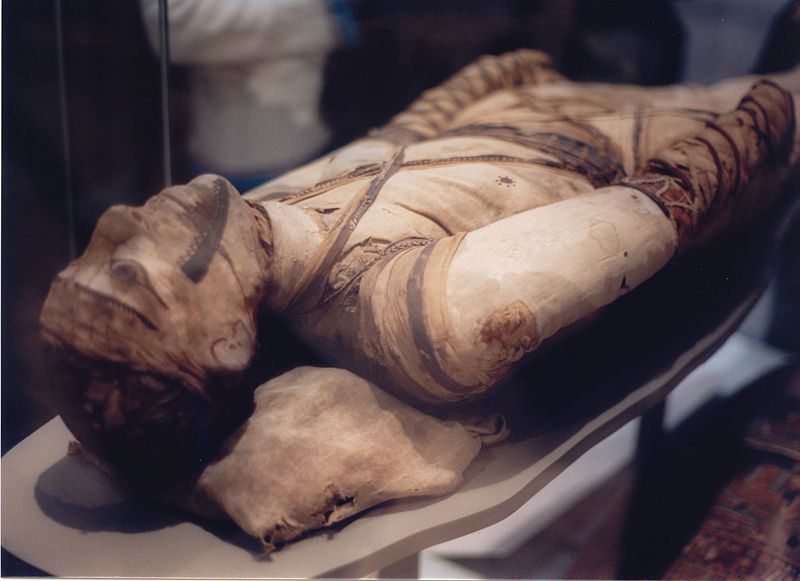
In fact, there's a lot that's weird about the wight. Tolkien has them as bony things, but they appear in D&D as these snarly bodybuilder types with Land of Oz hair. They're not that strong in hit dice but have the feared and hated ability of level drain, whereas mummies are tougher in combat but have a grab-bag of abilities that are not that nasty, and have a weakness to the common torch. Personally, I'll take the mummies; they come in all kinds of cultural flavors (Aztec ... Peruvian), there were cat and crocodile mummies, and it's not such a long step from those to the horrid animal-human hybrid mummies envisioned by Lovecraft in his ghost-written  Harry Houdini story, Entombed With the Pharaohs.

Anyway, I want to take a different approach than the "living undead" of the last three Deadly Sins, and suggest that wights, mummies, and whatever skeletal guardians may exist are just variations on a single type of creature, united by their motivation to remain undead. These tomb guardian creatures may exist in a lesser form (stats as a wight) or a greater form (stats as a mummy) but each one's appearance is largely a product of the culture that buried it, and whether it awakened soon or late after burial.

There is a special restriction on turning tomb guardians, as with the other sinful undead. Although they may be turned normally, the turning ends if any associate of the cleric picks up any of the creature's treasure. Turning will not succeed while any such associate is carrying loot, either. By ransacking the tomb, the adventurer shows his or her self to be a fellow-sinner in avarice with the undead guardian, and the power of holiness will no longer work as protection.

In addition to only being harmed by magic weapons, tomb guardians have two of the following special attacks, which vary from case to case (d6):

1. Level drain as a wight (but without "recruitment")
2. Rotting disease as a mummy
3. Fear effect as a mummy
4. Unerring tracking of those who stole its treasure (as in the old mummy movies)
5. Enchants a victim within 30'; save (Spell.Mind) or become mentally confused, transported back to the times of the guardian and unwilling to act (as in Lord of the Rings)
6. Shapeshifting at will, into smoke, an unnaturally heavy animal, or seaweed (as in legends of the Norse draugr)

Tuesday, 25 October 2011

Shadows: Invidia

The animated shadow is by definition a being of lesser standing, an envious follower, dependent on light and an intervening body, aspiring to an independent state it can never have. Like the ghouls, its status as undead wavered in early D&D, and is still uncertain in (for example) Swords & Wizardry. There is a certain eerie power in the idea of a shadow that one day refuses to serve, and that really doesn't need the additional tag of undead to chill the blood. Lord Dunsany memorably explored the idea of a detachable and tradeable penumbra in his novel The Charwoman's Shadow.


The sin of envy, or the medieval invidia, is studied by psychologists and philosophers as an emotion. It seems to be a pretty common theme in such studies to split the emotion into a "good" side and a "bad" side, which reflects the idea that emotions are basically functional but often go wrong. In this research, benign envy is explained as a desire to emulate the superior, while malicious envy involves achieving parity through reducing the superior instead. It is the destructive side of envy that the evil shadow embodies.

Shadows make a fine undead creature. Think of them as a void of life-force, lacking entirely in Strength. When they see a being with superior Strength, they enviously approach, implying that they will attack the strongest by preference. Their touch destroys the strength, but does not steal it. Eventually, their victim ends up dragged down to their level, a shadow among shadows.

What of the person who voluntarily chooses existence as a shadow? This is a rare wish, supported by an equally rare necromantic rite, and marks the ultimate triumph of envy. To give up one's own worthless existence for the chance to tag at the heels of a far superior person is similar to the motivation to become a zombie, perhaps. Thus, the living shadow creeps at its master's feet in imposture of the natural shadow. But the creature saps, rather than serving, its superior - making one attack per day on the victim's abilities, and adding any stolen points to its own score, until it merges in hateful life with the victim, creating a being of walking dusk without a shadow of its own, and adding the victim's hit dice and hit points to its own. Thereafter the envious soul has no reason to remain, its victory complete, and the completed shadow-being tends to become possessed by a darker genius.

At both stages, the living shadow can only be turned by two or more clerics, each bearing a holy symbol on which a clerical light spell has been cast, and arranged so as to surround the shadow.

For this as well as the more common undead variety of shadow, there exist several varieties which each possess their own special attack upon the abilities, and their own consequence once draining is sufficiently advanced (1d3 points on a successful hit, regained at 1 point/day). The consequence of zero points in any ability is death and conversion to a shadow.

1. Attacks strength; at 1-2 points victim becomes flaccid and unable to move.
2. Attacks dexterity; at 1-2 points victim becomes hyperactive, moving and acting about uncontrollably.
3. Attacks constitution; at 1-2 points victim becomes moribund and takes 1 hit point damage each round of moving.
4. Attacks intelligence; at 1-2 points victim becomes amnesic and unable to remember declarative facts such as his or her own name.
5. Attacks wisdom; at 1-2 points victim becomes catatonic, unresponsive to outside senses and lost in a world of his or her own mind.
6. Attacks charisma; at 1-2 point victim becomes repulsive even to him or herself, and will attempt suicide if not restrained.

Monday, 24 October 2011

Ghouls: Gula

Beyond the titular Latin-to-Arabic pun, ghouls embody gula (the cardinal sin of gluttony) in an obvious manner: they feed on the bodies of the dead. On top of that, ghouls are my favorite undead creature because, at least in their source material, they're not obviously undead. In Lovecraft's story Pickman's Model, it's implied that ghouls, like the inbred Martense clan in his less accomplished The Lurking Fear, are a degenerate strain of humanity, whose necrophagy forms part and parcel of their condition. Pickman even becomes a ghoul in The Dream-Quest of Unknown Kadath, where he and his meeping buddies come off as strangely sympathetic Addams Family types.

The paralysis that is the ghoul's special weapon, and especially deadly with multiple attacks, doesn't appear in Lovecraft, and may be original to the D&D game. I used to think it was a reference to the ghouls that accost Elric in Moorcock's The Vanishing Tower, paralyzing him with their cold touch, but the novel's 1977 date is later than the Chainmail and OD&D originals. It's unlikely that Moorcock cribbed the idea from D&D, but one never knows.

Although Gary Gygax made the conscious choice to make ghouls undead in going from Chainmail to D&D (more ghoul-trivia here), they seem like an obvious choice to explore as "voluntary undead" in this series. I've never quite understood how ghouls fit into the D&D undead mold of "if they kill you, they recruit you" because they seem so indiscriminately ravenous. A vampire might have the self-control to grant the "dark gift" of undeath or withhhold it, merely killing its victim ... but a ghoul holding back from a tasty, board-stiff human morsel? Hardly likely.

Living ghouls are gourmands and degenerates who develop a taste for human flesh and determine that the best way to get it is to feed upon the already dead. The diet awakens regressive tendencies in their genetic makeup and they become prognathous, robust and somewhat dog-like in their gait and demeanor. Haunting graveyards, they logically become followers of strong undead creatures, who feast on the souls of the unfortunate and leave ghouls the mere body.

Not being undead, living ghouls require a special reminder of their damned state in order to be effectively turned. In this case, it is sacred food, such as the consecrated bread or wine of Christianity, or barring that, foodstuffs created by a holy clerical spell. If the turning destroys the living ghoul, it lapses into a coma and can be returned to human state by forced feeding of consecrated food for three days.

The appearance of a ghoul - living or not - sets off ancestral memories in humans and related beings (dwarves, halflings, gnomes) but not elves, which can lead to one of the following fear effects - varying either by the individual, the ghoul pack, or on a racial level:

1. Save (Paralysis/Body) or paralysis by touch, as the original.
2. Howling causes a morale check among NPCs, and PCs must save (Spell/Mind) or become distracted, incurring -2 to hit and +2 to be hit.
3. Charnel smell within 30' forces a save (Poison/Body) or retch as with a Troglodyte's stench, unable to attack.
4. Paralyzing stare within 30'; victim gets two saves, one against the gaze (Spell/Mind) and one against the paralysis (Paralysis/Body).
5. Gibbering and meeping  in close combat is maddening; requires a save (Spell/Mind) or become confused and attack a random adjacent being.
6. A hit from a ghoul's claws requires a save (Spell/Mind) or the victim cowers for a round, either fleeing or fighting defensively.

And no - I am not going to stat up the bizarre, half-medusa Roy Thomas comic-book version of Pickman's Model....

Sunday, 23 October 2011

Zombies: Accidia

The medieval sin of accidia (acedia), or sloth, refers to a condition that today we treat as a mental illness: depression. But more generally, the sin refers to inability to act or decide, retreat from the world rather than engagement with the world, and in its ultimate expression, suicide.

Psychological writers, such as Erich Fromm or Roy Baumeister, have identified the human motive to "escape from freedom" or "escape from the self" by submitting to authoritarian regimes or cults. When people willingly become zombies, they symbolize this abdication of will to another. This living zombie is perhaps closer to the drug-induced state of living death implicated in the questionable anthropology of Wade Davis (The Serpent and the Rainbow) than the walking dead of George Romero. It also brings to mind the philosophical zombie, which forms part of the solipsist argument (referenced in Heinlein's story "-- All You Zombies --") that we can never know for sure if anyone apart from ourselves is free-willed and conscious.

Zombies, sluggish and slavish, embody the sin of sloth when a living person willingly submits his or her body to the ritual of a necromancer. Otherwise they are mere animated corpses, a desecration but nothing more than that. Necromancers greatly prize the former kind of zombie, for their greater power, and because to recruit them gives much prestige. Therefore, necromancers and their agents often haunt popular locations for suicide - bridges, precipices - in hopes of persuading the unfortunate to surrender their lives in one sense rather than the other.

A living zombie has all stats as a regular zombie, with 4 additional HP.  It is unholy but not evil ( having given up its free will) and not undead. So, it can only be turned by reminding it of its own identity -  its personal name must be spoken, or a mirror held up to its face in place of a holy symbol. If the turning destroys the zombie, the spell is broken and the person returns to life.

As a bonus, here is a d6 table of attributes and powers that can make all kinds of zombies more scary.

1. Fingernails and teeth that break off in the wound, preventing 1 hit point of healing per wound until Cure Disease is cast.
2. If wounded down to 3 or fewer hit points, guts spill out of the zombie's abdomen and come alive. They make an extra attack ignoring armor, and if successful ensnare the arms (on an odd "to hit" roll; cannot attack until victim rolls d20+STR > 25) or legs (on an even "to hit" roll, cannot move and 2AC worse until victim rolls d20+STR > 25).
3. Zombies are immune to piercing weapons (although being stuck on a spear can hold one at bay), and take half damage (rounded down) from blunt weapons unless the wielder aims at the head with -4 to hit.
4. Zombies can only be killed by physical damage if it does 5 or more points at once.
5. Can throw its own arm, which attacks on its behalf for 1d4 damage, while the remaining arm on the zombie also attacks for 1d4.
6. Is a bloater zombie.

Thursday, 20 October 2011

Seven Undeadly Sins

I'm thinking more and more that the right approach in monster-ology lies between Flame Princess' "do it yourself, do it all yourself" and conventional D&D's "here, all the monsters are in this book." In fact, my one-armed man chart from earlier in the week comes within an ace of accounting for the hit dice of most existing classic monsters, and is a good template for any others you may care to design.

But what about the stranger stuff, like undead? Well, what makes undead scary and unpredictable is their special abilities, both attack and defense. This suggests a little d6 table with possibilities for abilities that will make each encounter uncertain and memorable. After all, folklore doesn't treat ghosts as a race, but as a class of cursed beings, each with its own story.

One thing I want to do before Halloween is try a new take on the undead, using as a background the medieval church doctrine of the Seven Deadly Sins. Beyond a naturalist "ecology" of the undead, these reworkings imply a mythical symbology and moral psychology of these wretched creatures. In brief: sloth = zombies, gluttony = ghouls, envy = shadows, avarice = wights/mummies, lust = vampires, wrath = spectres/wraiths, pride = liches. Justifications to follow, especially for that one that doesn't quite seem as right as the others.

A final issue: undead-ism is most often seen as a curse transmitted unwillingly, but the more frightful possibility is that some persons desire the various states of undeath, as a means of achieving desires unavailable to living mortals. It's this potential that I think affords a new vantage point on these venerable villains.