Showing posts with label strength. Show all posts

Saturday, 27 April 2013

Low Stats As Disadvantages: Strength

Clovis Cithog, in a comment on an earlier post here, brought an idea up I thought deserved further development:
I PREFER to use low ability scores as a role playing opportunity … Low strength score does not have to imply that one is a weakling, but could reflect a prior shoulder or back injury.
with several more examples.

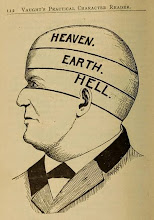
This struck a chord with me. After all, who is more likely to be an adventurer, this guy who rolled 3 strength:


Or this guy:


With this in mind, we can have really low scores, that normally would imply gross incompetence, instead mean some kind of disability that has a special effect. In Original D&D and derivatives, a reasonable range for the penalty scores is 3-6, to offset the exceptional 15+; in AD&D and derivatives it's much the same, except 4d6 keep 3 leaves little chance for these scores to emerge; in Basic and derivatives it's 3-8.

We can use the same table for all these systems if we split up the rolls of 5 and 6 in "6 or less" systems by what numbers make them up.


So when your starting character strolls into the Necessary Contrivance Inn and all the other characters say, "Wow, check out that missing left thumb, did you use some point-buy system and get some sick advantage like Ocelot Reflexes?" you can say "No, man. I rolled it up. Old School style."

More of these to come.

Friday, 5 April 2013

One Page Obstacles & Breaking

It's time to get back to the old-school old school with Breakage II: Electric Boogaloo.


This page combines one of my earliest blog posts with my earliest One Page. Strength is not like the other abilities: it can easily be measured in terms of force, and has a straightforward application. When you roll to open a door, you shouldn't be rolling for how much force you put out but how tough the door is to open.

Breaking stuff is fun. Or not fun if your weapon gets broken during a critical hit on your arm in combat. In the latest 52 Pages, items are either carried on the chest or by the waist, so a crit on body or legs would respectively threaten items in each of those areas with breakage.

Thursday, 16 February 2012

AD&D Gender Differences: Not Big Enough for Realism

If you defend gender limits on Strength in a game because of "the basic facts of anatomy," are you going far enough?

Most research studies put men on average at about twice the physical upper-body strength of women, whether measured by lifting or throwing (even this meta-analysis challenging the importance of psychological sex differences has to acknowledge the strong physical sex differences on this score.) To put it statistically, effect size differences on things related to the Strength stat in roleplaying games range from 1.5 to 3 standard deviation units (d). The distribution overlap for a d of 2 looks like this:


What this would mean is that 2.5% of women are physically stronger than the average man, and 2.5% of men are less strong than the average woman. If you assume that the male is the norm for the D&D character (and given the premises of this discussion, hey, why not?), this translates to a -6 penalty to female Strength, so that the top 2.5th percentile cutoff of the female distribution (3d6 roll of 17+) matches the top 50th percentile cutoff of the male one (3d6 roll of 11+).

Nothing this size exists for psychological differences, so unless you're positing some very bizarre cultural constraints, balancing out male strength  by giving women characters a +6 to "wisdom" or "charisma" or what have you is just as unrealistic.

And people are arguing about AD&D capping human females at 18/50 strength? It's clear that neither realism nor equality are served by the classic  rule, which can only be defended on the grounds of tradition.

My own game's rationale for not having gender modify strength: Along with the wizard, the dwarf, the elf, the barbarian - each of which rests to some extent on a suspension of disbelief - there is another fantasy archetype, the "warrior maid" or "kick-ass woman." Whether her name is Penthesilia, Bradamante, Wonder Woman, or Xena, both men and women love to watch her, and sometimes to play in her role. Anything the system does to make this character possible, and attractive to play, is allowable.

Long story short: why the hell are people so concerned about female anatomical realism when half the female fighters in D&D art look like this:


And if so, why can't they equally "unrealistically" look like this?

Tuesday, 22 March 2011

What do we want in a map? 1: The Elvis Door

I'm going to lead up to the release of my dungeon mapping Powerpoint resource with a few reflections on what I find useful in site maps. If you want to jump ahead and see the Dungeon.ppt protocol in action, check out my OPD entry "Egg of the Gazolba" which I've now linked in the download section.

The classic old school look to maps is a great starting point. Playing a low-rules, easy-improv game gets hamstrung by the requirement to have everything laid out in professionally produced battletiles. And yet there are a few improvements that I'd find real useful when looking at the map in actual play.

Improvement number one is showing which way hinges swing on doors.
Door fight ... roll init!

Huh? It's lost in the blogosphere now, but before I started my current campaign I saw someone's dungeon map that had that detail, and scoffed. How picayune can you get!

Then I got DMing. And my players wanted to know which way doors swung.

It's actually pretty important if you treat door opening as a major event fraught with danger ... as you should. Whether the door swings in or out will determine what method you use to open a difficult door: push or pry. This has real consequences if you're trying to combine many man-strengths into one, following my "feats of strength" method. It's easier to get multiple people to push than to operate a crowbar. Where's that ten-foot jimmy when you need it?

And then when you open the door, you're not just going to swing it all the way open. It creaks open ... you peep in and see ... which half of the room? And monsters could be lurking this side or that.

So okay, I could just wing it, say "right" or "left." Or roll d6, evens or odds. But it seems like the kind of persistent detail I really should have put down, graphically, on a map. Especially because it can make the difference between opening a tough door and having to hack it down.

It can even give some clues about the defensive architecture of the dungeon. Were the builders worried about invaders from the topside? Then the doors push in, as explorers progress, because the opening side is more easily barred. What if the doors have to be pulled open? Then the concern was more about barricading whatever could be rising up from some place in front of the party's line of march. Then again, if the door gives on a 10' x 10' broom closet (yep, I think an adult green dragon could fit in there), it's probably going to open out into the more spacious room or hallway.

Anyway, I modified the traditional door icon with a slanty-topped "Elvis hairdo" rectangle from the Powerpoint flowchart shapes set.* The slanty top would show how the door opens. And because that was kind of hard to see, I added a line across the shape, to make it clearer that the shape was a swinging triangle stacked on a traditional door icon. Results to the left. I'm not taking chances, anyway. My dungeon.ppt file also has some classic, flat-topped door icons, and I resort to those when I need a slab, sliding door, or other hingeless apparatus.

The Elvis door works fine on my maps, and keeps my players happy. But I have to know, is this the kind of thing you find useful?

*You know, a pompadoor.

Wednesday, 21 April 2010

Practice Break 1: Strength-Related Actions

Before seeing what I can dredge up from my theory-dense essays of 14 years ago to supplement my theory-dense essays of today, I though I would take a break to work out some ways these ideas can inform the practice of house ruled 20th Century D&D. 

Last post I mentioned strength-related actions such as bending bars, lifting gates, and breaking down stuck doors as an example of how using the dice roll to decide the environment, rather than the character's effort, can overcome some problems with traditional ability and skill rolls. Strength tests are especially good to illustrate this because they are only applications of force against a resisting object. There is no secret insight or split-second decision for the character to make. Let's see how we can apply this to a strength test system.

Character factors: Should strength action chances go up with level? It doesn't seem they should, unless weightlifting and muscle development are part of a special character class concept.

Of course, the Strength ability should count. I'm not going to presume to know how your system uses 3d6 ability scores, but I'm partial to a general, elegant system of 13-15 = good (+1), 16-17 = exceptional (+2), and 18 = legendary (+3). In any case, I'm going to base any character-side bonuses on the standard bonus your system gives to such things as to-hit and damage from Strength, to make record keeping easier.

As we'll see below, it will be useful to express a character's Strength in terms of "the strength of n men." Figure an average modern man (or average woman tough enough to go adventuring) can deadlift about 200 pounds, and the world record is just shy of 1000. Then for simplicity's sake, erring on the He-Man rather than strictly realistic side, a +1 modifier corresponds to the strength of two men, +2 to three and +3 to four (or two men, who each possess the strength of two men).

Negative modifiers fractionate your strength, so at -1 you have the strength of half a man, a third at -2 and a quarter at -3.

Also, nobody's ever noticed this, but encumbrance really should matter when making some tests of strength. There's a reason why He-Man wears nothing but a Speedo, metal suspenders, and boots. If you're trying to pull iron bars, you're also trying to pull the weight of your iron gauntlets and vambraces; if you're trying to deadlift a stuck gate, you're also struggling under the burden of your backpack full of gold pieces. A reasonable penalty would be to shift the character down one modifier when heavily encumbered, so that +1 becomes average and average becomes 1/2 a man. For door opening, the load becomes part of your mass, so it shouldn't count there.

Depending on your campaign, small size characters like dwarves and halflings may take a general -1 modifier category to all these feats, due to their smaller mass and leverage.

Circumstance factors: This is where you roll to find out just how heavy, or strong, or stuck, the object you're trying to budge actually is. While all kinds of complicated weight and architectural calculations might come in here, really our "n men" system makes it simple. We only need to know two things: how many persons can apply themselves to the task at once, and how many man-strengths does it take to move? Whether for bars, gates, or difficult doors, a simple d6 table can be ginned up. You can roll on it, roll twice taking the highest or lowest according to your sense of the area's difficulty, choose a result on the spot, or work out each test's difficulty as part of adventure design. Just write two numbers next to each door, or zero if the door opens easily.

First roll: How much force is needed? Difficulty in man-strengths.

1: 1 man (ordinary stuck door, soft metal bars, well-oiled light gate)
2-3: 2 men (heavy stuck door, thin bronze bars, obstinate light gate)
4: 4 men (ordinary jammed door, thin iron bars, well-oiled heavy gate)
5: 6 men (heavy jammed door, medium iron bars, obstinate heavy gate)
6: d6+6 men (heavy sealed door, thick iron bars, jammed heavy gate)

The descriptions are only for scale, as it were, and can sometimes be rolled separately from true difficulty. Appearances can be deceiving; strong-looking obstacles can have a hidden weakness, weak-looking ones a hidden strength. Rust and corrosion add +1 to difficulty for doors and gates, -1 to difficulty for bars.

Second roll: How many persons can combine their strength in the effort? (For bending bars, always 1)
1: 1 person (narrow door or gate)
2-4: 2 persons (wide)
5-6: 3 persons (very wide)

Ingenious parties may figure out ways to increase the number of man-strengths applied to the problem through rope, rams, or leverage.

For doors, if the amount of force applied is one man-strength less than the difficulty, it actually will take 1d6 more tries - loud, echoing tries - to open the door, though this will have to be found by trial and error. Also for doors, if the amount of force applied is two men or more greater than the difficulty, the characters overshoot, and are rushed precipitously into whatever situation awaits on the other side of the door. Very strong characters may announce that they are applying a lower effort than maximum, to avoid overshooting.