|
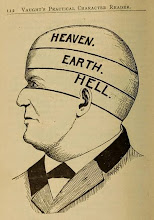
| The last time D&D was ever marketed to cool people. |
Others quest for an El Dorado, a revitalized hobby scented by Febreze instead of cat piss. In this odyssey, families, regular folks, and the ever elusive middle aged soccer mom are skilfully steered clear of all things stigmatizing, difficult and awkward - lost sheep emerging into an engrossing world of participatory narrative that they never knew.
These twin idylls are probably distorted and certainly unrealistic as a characterization of the past or the conceivable future. They read like the “glorious past, glorious future” thinking of extremist terrorist groups (pdf link) although I’ll allow that those who follow roleplaying dreams destroy only disk space on forum servers.
All the same, many of us have glimpsed the possibilities. The impromptu game on a train with an utter non-gamer. The clique of punks in my high school who ran a wild mishmash of Runequest and D&D. And the Eden myth is somewhat true - earlier versions of the rules are more friendly to non-geek play. This is not because the rules themselves were readable and playable by the average person – quite the opposite! Rather, it’s because they invested most of the rules knowledge in the referee.
The approach up through AD&D was to give the DM authority and keep as much of the rules secret as possible. The DM Guide was supposed to be a secret from the players, the attack and saving throw matrices locked away inside its covers and behind the sacred screen. Skill use was entirely the province of the DM.
This meant that players could take a naive, analog approach to the game. With no rules knowledge at all, they could proceed by just saying, “I do this, does it work?” More to the point, they didn’t need to be confronted with a wall of stats and procedures. It’s not that they had no agency; it’s that their agency was completely in-character.
And then the nerds ruined it for everyone else; the way that, buying cases of cards at a time, they destroyed Richard Garfield’s vision for Magic: The Gathering as an ever-unfolding surprise. The nerds had to know what they needed to hit armor class zero; they had to have clearly defined skill procedures; eventually, they had to have feats and powers to feel special. As character options< became more complex, optimized builds became a focus and obsession. Instead of the wall of nerd elitism stopping at the DM screen, it grew to enfold the whole playgroup.
So D&D stopped being a one-nerd game and started being a multi-nerd game. Rule systems that put everything up front, no matter how simple, miss this point. To get non-nerd players into the game, you don’t need to increase their sense of understanding or control over the rules. In fact, you want them to ignore the rules and trust the referee. And that’s something you can’t buy in a store – a DM who is socially skilled, deeply knowledgeable, and trustworthy.