Showing posts with label players. Show all posts

Monday, 31 July 2023

Hex Crawl 23 #197: When Can You Split the Party?

Five hexes northwest, three southwest of Alakran.


Another vacant hex, another opportunity to slip in a more or less normal opinionated blog post.

"Don't split the party" is a traditional refrain in adventure roleplaying, and the rare adage that applies both in-character -- as tactical advice -- and out-of-character -- as table advice. When some characters go off to do their thing, there is only one gamemaster, and the others are left spinning their wheels, so it's an issue of enjoyment. It's also an issue of table logistics, as the two sub-parties need to have information kept from each other until they reunite. Easier to solve online, but harder in-person, with awkward moves to separate rooms and the GM running back and forth between the two.

And yet ... for every rule there is an exception. When you have a player who wants to take their character off-scene and do something separately, there is an opening for a healthy party split through one-on-one play. Some people might tut-tut, thinking that humoring the player just creates a diva syndrome and envy in the others. I haven't experienced this, though. All the split-offs met these conditions:

1. They involve one player.

2. They are resolved outside the party's joint time.

3. They involve a player with different playstyle from the rest of the group. 

I've maintained that diversity of play approaches in a group is a strength, not a weakness, of games, and has to be mechanically accommodated. Solo play is one way to do this. Let's go to the case studies.

Case 1 is an "impulsive" player-type in a party that got swept up in a local conflict between a free city and a neighboring kingdom, and wanted to do some scouting of one of the kingdom's bases. The stealthy mission was accomplished in online play (pre-roll20).

Case 2 is a story-driven player who wanted to explore their romantic relationship with an NPC merchant and do some world-discovery along the way. As part of downtime, the pair went on the NPC's northern mercantile run, a trip lasting about a week and exposing much of the map in that area. The romance suffered from the trip -- such are the ways of dice, or indeed, of long trips with someone with whom you're used to shorter interludes -- but the solo play was highly satisfying.

Cases 3 and 4 involve the same super-impulsive player who never met a dimensional portal they didn't jump through. The first jump, into Jennell Jaquays' deathtrap room from the Tomb of Borshak, was resolved through online play. This player survived but the other players were in the dark, until their further investigations of the tomb found the roon in question. The reunion was fairly smoothly done.

The second jump was into the portal of a teleportation device operated by a group of goblins. 4th level bard/warlock in 5th edition vs. a room full of 25 goblins, the goblin leader and two bodyguards. How that went ... has been resolved, but has yet to be known to the rest of the party. Suffice it to say that in order to keep the impulsive player in the game, their "B" character will be joining the party.

So, splitting the party can be fun under a few specific conditions that don't interrput normal group party play. Keep this in mind -- all rules can and should be broken if you understand their underlying principles!

Thursday, 4 April 2019

Steal the Eyes ... Scratch That

That feeling when you're playtesting your long-delayed megadungeon and there's a 20' high bird god idol with glowing orange eyes and one of your players -- who has in fact probably never seen this picture:


follows her rogue's instinct to climb up and see if those eyes are a) gems and b) pry-able ...

but no, they are just magic light cast on stone eyes.

In what is not really a fit of pique and more like dogged mission completion mode, she then takes hammer and chisel and chips off all the light-bearing stone, raining a shower of little half-glowing, candle-strength chips on the floor ...

which turn out to be a useful small treasure in their own right.

Confirming that it's much more fun to redraw the path of ages, then follow it.

Friday, 20 November 2015

Paraphrase Third-Party Conversations

It's always an awkward moment in any role-playing game when the game master has to represent two, or worse more, non-player characters talking to each other. The exercise resembles nothing so much as young Danny's conversations with his own wagging finger in "The Shining." Using funny voices, the GM ekes out an extended scene while the players sit and watch.


But this is as destructive of the social nature of RPG as any paragraphs-long set-piece room description or boxed text would be. The point of the game is to construct a shared reality through interaction. Awareness that you, the GM or player, are entering into a monologue-as -dialogue should be a sharp signal to shift gears.

To what, exactly?

While some advise to skip such scenes entirely, I don't think it's possible or desirable. Instead, what I do now when I feel a sock-puppet play scene coming on is to paraphrase. That is, switch from this:

COURT WIZARD (bad Peter Lorre impression): Eeeuhh, my lady, what these adventurers propose is verrry reckless.
QUEEN (bad Renee Zellweger as Bridget Jones impression): But the bones of my forefathers are endangered if the rumors are true!
COURT WIZARD: They were placed there to watch over an ancient evil! Who knows what these bumbling louts will awaken?

To this:

YOU: The Queen supports your mission to rescue the bones in the tomb, but the wizard is agitated and warns her that you may disturb an ancient evil.


This leaves it open for the players to intervene and address either party, at which point a player-GM conversation can take place in character again.

Come to think of it, the goal of maximum interaction also suggests a light touch when describing scenes, but that'a topic for next time ...

Wednesday, 18 February 2015

Players Align Characters Through Actions

Since I got back into role-playing almost 5 years ago I have never used alignment in a game. It just seems ass-backwards -- writing down a promise to do some abstract things on your sheet, in a vague terminology, and then arguing about whether the specific things you do add up to that vague promise or not. If you're not arguing about your alignment, you're either doing your alignment or ignoring it, either of which is equivalent to what a player does in my games anyway, depending on whether or not they have a clear character concept.

To paraphrase Gygax, "character background is the first three levels" and in the same spirit, alignment is what you do with your character. Player alignment. Not the semi-jokey kind of schemes that lay out how players tend to behave towards each other, the GM and the game structure. One of those appears below.


By now several of these sectors are as mythical as the catoblepas (has anyone ever actually seen a "scenery-chewing thespian" player?) but this will do to illustrate what I am not talking about. I am talking about observations made over the years as to how players, when not constrained by alignment, tend to play their characters. Player-determined alignment is real but, going beyond what I wrote several years ago, it doesn't correspond to any alignment scheme used in D&D or in the most fervid, hair-splitting heartbreaker. It's a characterology all its own, that deserves its own terms, put together in opposing pairs.

Never put a fork in a toaster - PolyvoreImpulsive: The player can't stand boredom and pushes the character to propose reckless plans, start fights, and generally see what they can get away with. Their action will usually account for half the party's failures and half their successes.


Strategic: One kind of leadership role, this player moves very cautiously, often is found physically restraining other characters, and wants time to think things through. Not a rules lawyer, but the most likely to consider the rules as part of the plan.

Exuberant: Another kind of leadership role, the player runs the character as a striding, swaggering bag of charm; not so much reckless as eager to please the crowd with the best move, the best solution. The crowd, by the way, includes the GM.

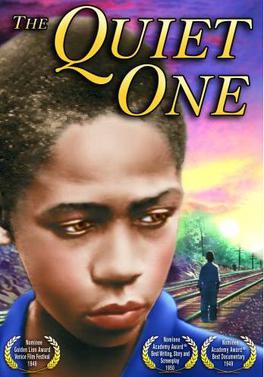
Quiet: This player may be introverted, unsure, or just enjoys watching the game play out around them. They respond when spoken to, are often asked to run point or guard the rear or cast a spell, but rarely propose anything on their own. There is a lot of middling GMing advice written about trying to draw this player out but I find that acknowledging their existence in small and meaningful ways works best.

Dark: This player, through their character, expects the worst of what's around them, and so feels justified in doing the second-worst. This can take many forms and is not always the stereotypical dark elf assassin, but distrust, avoidance and sneak attack form part of their usual counsel to the rest.

Naive: The player enjoys portraying an overly trusting person, whether a fool or just really kind-hearted, to lighten up the grim, heavy, paranoid world of adventure. They're such a perfect patsy for the usual DM array of sympathy traps that you almost feel bad springing them on such an obvious mark.

Obsessive: What the "thespian" stereotype gets wrong is that real acting is hard, ham acting is self-policing, and usually players who want to play their character to the hilt open up a can of spam based on one obsession, be it food, wealth, combat, sex, religion, or hate. They use it more as a running gag than an excuse for soliloquies. Really, there's enough irony in the water these days that if the room isn't laughing heartily, they'll turn off the shtick real quick.

Eccentric:  Kind of the mirror twin of the obsessive but coming from an opposite place, this character sends out a lot of random signals but there's a difference between playing weirdo and playing impulsive - the impulsive player is trying to accomplish something and sometimes succeeds but the eccentric is just trying to make a style point, like Nerval walking a lobster. Truth be told, though, frame-breaking jokes are so common among everyone that this one's "wacky" in-character pronouncements get mistaken for out-of-character banter half the time. White Wolf did a good job of writing niches for this kind of player into their games.

So with this scheme in mind, there's really no reason to write it on the character sheet, because it's what the player does. But for a GM, rolling a d8 or two to come up with personality elements for an NPC that's easy to play because you have the examples all around you - that's another matter.

Tuesday, 17 February 2015

Impulsiveness

I'm not sure if I'll get around to recounting the latest misadventure of the Muleteers, but there's a couple of posts to be had reflecting about the last session.

Huizinga, in The Waning of the Middle Ages, calls to attention "The Violent Tenor of Life"; the ease with which harsh and tender passions in alternation were unleashed, the revelling in cruelty. Although controversial as historiography, this description perhaps tells us more about what we moderns seek in the medieval, the archaic, the Renaissance or the Regency or the Wild West, when these are presented as times where life was cheap, morals were loose.


The role-playing game in its imaginative detachment allows the same vicarious pleasure in the impulsive act of grisly consequence. Vicarious? No, the direct pleasure of being able to say "I waste him with my crossbow" and having it happen as easily as saying it; of watching, horrified and grinning, in the mind's eye as a series of critical and fatal hits makes Peckinpah work of the enemy. The pleasure of being such a fearsome character and choosing to exert a brash and self-serving virtue; of hoisting sacks of coppers to urchins, the equivalent of Nino Brown serving up turkeys. The pleasure, even for mild-mannered character players, of being the monk hiding from the Vikings, the Wild West schoolmarm, the scholar who can live a little shady and still look a saint by comparison.

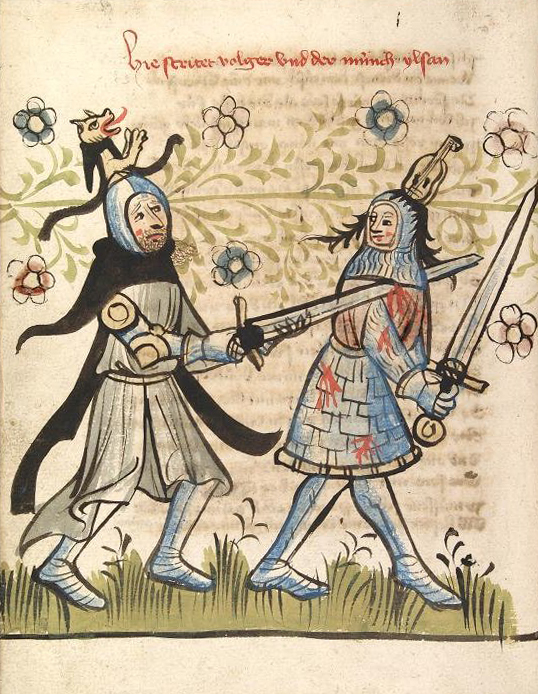
The roleplaying scenario strips away nervous inhibition and allows action as transgressive and pointless as that of the pictured fellow under the terrier crest who is spit-roasting a man for the crime of wearing a rebec on his head. Dealing out violence under these circumstances acquires a palatable irony because these are people long since dead, or better yet, who never could have lived.

One final pleasure, to the player, is finding out the boundaries of the world of action and joy. Does having a handful of hit points above the norm means that world is your arena whose inhabitants are merely bled and bowed bulls for the matador? Or rather, is it a place where crime is abhorred, vengeance is meted, and the arm of punishment is long if not swift?  Hurrah, for the scales are tipped in the favor of the latter option, the morality of the Hays Code, where we see every murder and blasphemy dealt out by the arch-hoodlum before the coppers surround him and fill him full of lead. Because to deal out the rough justice of consequences is the particular pleasure of the gamemaster. And the truly dispassionate gamemaster knows to make the delay or denial of justice, as unlikely as it may seem, a possible adventure in itself, if one of the hardest.

Friday, 21 June 2013

Who Brings New Player Characters? The Plot-Copter Does

The usual way to integrate a new player-character into the party is some "hail fellow well met" cut scene at Ye Olde Tavern. But what happens if the party is on long-range recon and there isn't a tavern for miles?

Well, you can always be hardcore and require them to return to civilization before the new player can start. But that frustrates everyone.

Taking a cue from picaresque literature, I prefer the meeting to be on-site, and covered by the barest fig leaf of plausibility. There's always room in a fantastic universe for the party to meet up with a fellow "solo adventurer" in the ruins, or to encounter a wanderer from even stranger spaces and times who was placed in temporal stasis or thrust through a gate. A strange origin can itself be a plot hook for the new player.

In my campaign there have been three character introductions, none of them in a tavern. For the first, I took the character through a mini-game detailing his travels from south to north, before joining him to a caravan that the party had been hired to guard. For the second, two players had to be introduced, so I had it that the one (hermit) met the other (merchant agent), who had been hired by the party's current employer to follow the party, joining it if necessary, in order to make sure they were carrying out the duty they had been hired to do.

Most recently, a rogue and her wizardly henchwoman were introduced to the party in the middle of a coastal maze of cliffs and rocks. Having been shipwrecked, the new players had been huddling in a cave until the party showed up. Conveniently, this cave was a good parking place for the hermit character to go on a retreat, because her player was going to be away over the summer; another, less common real-world occurrence where an in-game solution needs to be thought up.

Regardless, I always also the new player with words such as "You take an instant liking to her for some reason" or "You all feel you can trust each other and move on." Yes, in reality, these kinds of wilderness meetings would be hedged round with suspicion, and any NPC met under those circumstances would be treated very differently.

But there's no getting around it; the players know that the new player wants to get along and become part of the band. Better to acknowledge that immediately and move on, rather than give the impression that the game is about setting the players against each other. If there's any jarring incongruity about the meeting, it will quickly be forgotten as the players create new memories of fun and adventure together.

Friday, 22 March 2013

Experience for Ends, not Means

The other day noisms expressed some nostalgia for the 2nd Edition D&D experience rules, where characters got experience for doing things related to their class - fighters for killing monsters, thieves for getting treasure, magic-users for casting spells relevant to the adventure and so on. There were also some awards for playing well, in terms of role-playing, being a good party citizen, achieving story goals, and becoming a better tactician, although these were quite vaguely defined.

I remember greeting these changes with satisfaction back in the day - finally, an experience system that was more "realistic"! Plus, it rewarded playing in-class, and isn't that what 1st Edition aimed at doing but in a more clunky, ornery and punitive way, punishing magic-users who got into combat or fighters who shrank from it?

Nowadays, though, I have a different evaluation. I've realized that the 2nd Edition approach mostly rewards player skill directly, rather than allowing players to use their skill as they wish and rewarding the outcome of that.

In other words, it rewards the means rather than the end. I don't think this is a good thing. Let's look at each application of this.

* Rewarding class-consistent behavior. I have never really understood this. If your fighter is collecting magic wands and your magic-user is wading into combat, and that's not a good thing, surely a) this is the fault of the system for not emphasizing each class' strengths and weaknesses and b) this is a point of individuality of the character, rather than an affront against the divine order. If the party followed their bliss individually, surely the only time they would ever agree on a joint venture would be to kill a monster (fighter) guarding treasure (thief) whom the gods have decreed unholy (cleric) and can be hurt by spells (magic-user). The whole point of D&D is that diverse means are combined toward the same end, but if the means are rewarded, this splits the party's desires.

* Rewarding role-playing and good behavior at table. I already am on record that role-playing is and should be its own reward, end of story. And I recently wrote about good behavior at table, to which I'll add that in-game penalties and rewards for that are a wrongheaded, frame-breaking, and socially impotent approach.

* Rewarding "good play." Again, shouldn't good play lead to success, and success be its own reward? I suspect that what's lurking behind this is a disavowal of certain means that lead to in-game success. "Wait no you can't take a barrel of creosote and 1000 nails and ... Argh no you must slay in man-ennobling combat! No points for you!" Forget plot railroading - this is play railroading. Or maybe you like the barrel trick. The point is that the DM gets to approve of the means, not the end, and this takes something away from the players.

* Story goals. Rewarding the achievement of some goal derived from the story, finally, is the only end-reward in this whole scheme. It's a decent enough end to reward, as long as you keep an open mind about what counts as a satisfying end of the story. Players should feel like they can change allegiances and priorities without any penalty other than those in the setting. Anything else is puppeteering.

Treating the party as a bunch of venal mercenaries who only get involved in intrigue if there's a reward - that's another "end," one more in line with the traditional approach. Rewarding progress in the social structure of the campaign, so treasure is mostly useful to buy yourself rank and friends, which you can also get by going on quests and missions ... that's a third "end" for a system. I'm still torn about which kind of ends to reward with the final version of my experience system. But more on that, later.

Tuesday, 19 March 2013

The Antisocial Nice Player

Here is one thing I have learned since turning my hand to active DMing as an adult:

Rule number one is: fun ...

and this applies to antisocial behavior, too. Many, many bytes have flown across the internet concerning the scourge of the player who backstabs and steals from the party, or the lout with poor social skills. Many suggestions have been made about how to deal with these people. But I say rule number one is fun.

We almost never see the following situation brought up. I'm not sure how common it is, but consider it as a thought experiment.

Five people and a GM get together to play a game. Four of the five players have fun playing a freewheeling, treasure-filching, underhanded bastard. The fifth wants to play cooperatively and do great and heroic things.  This causes friction at the table.

Yes, this is a conflict of fun, too. As much so as when the numbers are the other way around. The way to resolve this is the same - alert the out-of-step player that they are out of step and give them the choice to either play differently or leave the group. Or, maybe you as GM don't think you have the skills to referee a four-way intrigue hurlyburly, so the right thing to do is confess: "I can't produce fun for you guys." And not put it on the players.

But why is this situation never recognized? Even if it never happens, even as a thought experiment, it has the value of focusing you on what is really right and wrong about the situation. Thinking about it makes you realize that a lot of this "behavior advice" is actually moralization of one kind of fun over another. A lot of this advice, consciously or not, is taking the kind of behavioral modeling you might apply to a classroom of schoolchildren and trying to apply it to adults who choose to play a game together.

To give my personal odyssey: Running my first old-school campaign, I was exaggeratedly afraid of the hazards of backstabbing, even though its players were three of the nicest and most cooperative people I've seen. I required them to swear an oath of mutual support to the folk-saint of adventurers on the skull of a dragon, which was completely unnecessary. The current campaign group flies very well without such artifice. Even more so, DMing pickup sessions for the university game club has given me a renewed appreciation for the sneaky player, how to handle them and let them contribute to the fun. It may be that I put them on best behavior (I did get addressed as "sir" a few times when I first started showing up), but at the same time I've managed to have good times DMing the high-flown as well as venal, the socially skilled and the more unfortunate.

Yes, there are hard cases and horror stories. And those, as in all things, tend to circulate because they make good campfire tales. But those situations should be judged and handled the same way you would handle any other social situations. Letting go of the need to implement some kind of maturity lesson into your rules and play, I think, is the sign of true maturity.

Wednesday, 27 February 2013

Sketches From Faerie

And now, a few pages from our player Lui's sketchbook (creator of the wonderful Tomb of the Iron God maps). These illustrate sights and marvels seen by the Band of Iron in connection with the faerie realms.

 
The mind-altering faerie fruit doesn't actually have the Goofy Grape and Loudmouth Lime faces, but it is very addictive. Lui's character has been lucky to survive this far, considering that the high-concept is "an elf who wants to taste everything." 

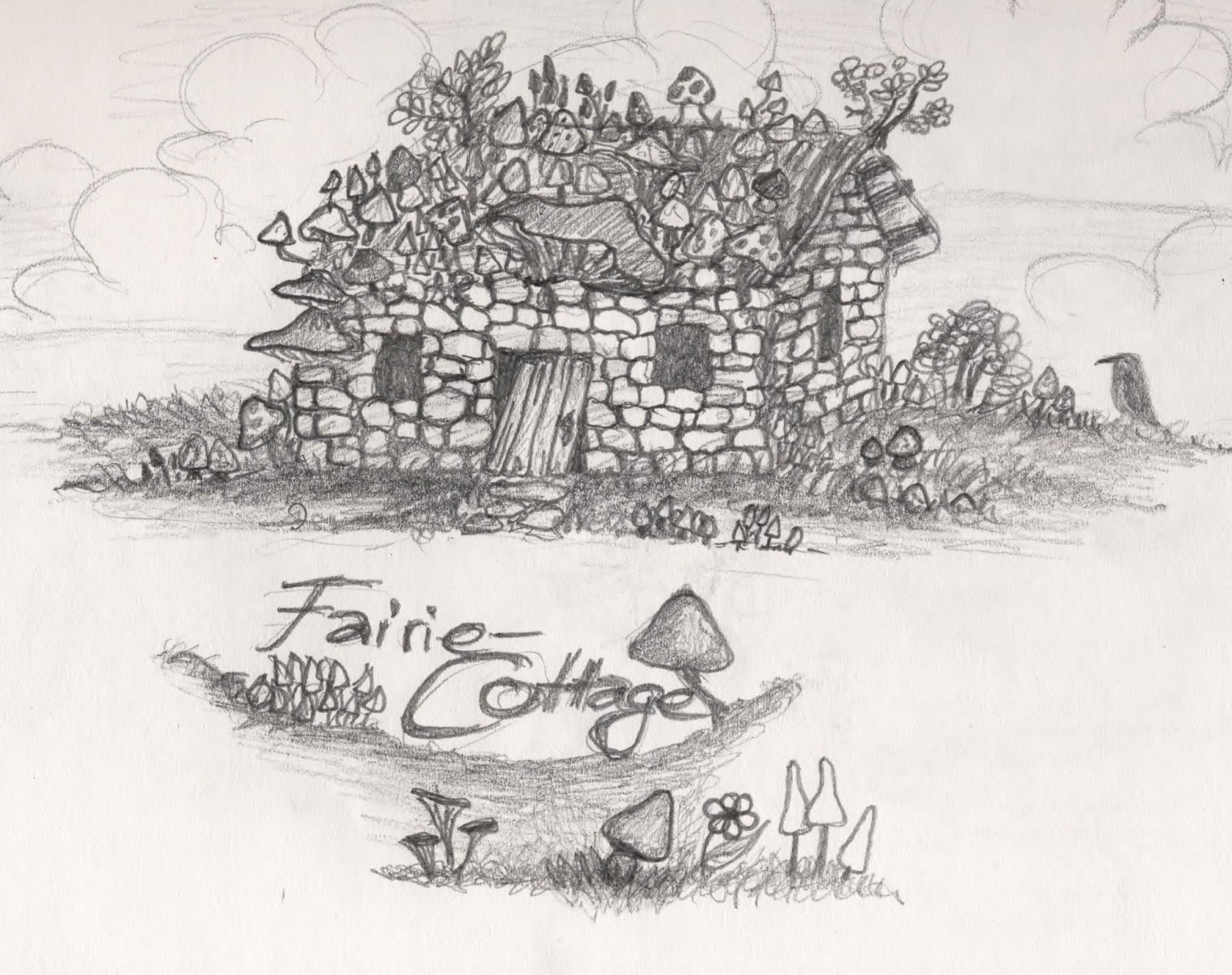
This is a stop on one of the Faerie Roads - an overgrown cottage where dwells a little fungus-man, skilled at healing with moss and honey-slugs.

On the road, the Band had to step aside and avert their eyes as a faerie army marched by on the way to war. The elf must have peeked because this is a pretty good likeness of the scene.

The two guards I placed at the gate of Leslie Furlong's One Page Dungeon Contest winning scenario, the Faerie Market.

Say hello to the bad guy: Anton the Mountain, retail faerie fruit greengrocer.

Monday, 11 February 2013

The B Team Can Relieve Your Campaign

A couple of recent gaming developments have made me really appreciate the practice of keeping up more than one set of characters in any long-term gaming group.

Part of my recent travels involved returning to the Cafe 28 on New York's 5th Avenue where some of the Red Box NYC games take place. Investigating, I found that a Glantri game was taking place the night before I took off back home, so I showed up to a table packed full of Erics (no, seriously, there were 4 Erics out of 7 guys at table).

One of these Erics was blogger "the Mule," who'd been present at my previous foray, and another was the GM. He ran a B/X game mostly by rules as written with some nice touches - no duplicate spell memorizing, declaring only spells and withdrawal from combat before the initiative roll. The players had maps of Eric's megadungeon from three years of continuous play, spanning five levels and hundreds of rooms. This "Chateau D'Amberville" is based on Castle Amber in the sense that The Lord of the Rings is based on the Elder Edda. It was truly a great glimpse into the potential of the format.


As it turned out, my newly rolled wizard character - Raz, son of Taz - was adventuring that evening with a B-list party consisting of players' secondary characters, mostly level 5 and 6. This explained the nonchalance when two of them got double-level drained, in merciless old school style, by some unexpected spectres, which we quickly fled from. I admired the good spirits of these players, who were evidently playing in a very free-wheeling table with drop-in party composition and multiple characters.

On returning home I unleashed the lead-in to an episode I'd been brooding over all January - a climax adventure that could take place in one session, and would cap off the plot of the "Faerie war" arc they'd been following since the summer. Today I learned the limits of plot-heavy climax adventures ... when one of the players called in sick and we realized that we just couldn't play on in this adventure without her.

So we decided to form a B-Team with the existing group, rolling up new characters and embarking ad-hoc on an adventure. The A team (Band of Iron) had started in the Valley of Milk and Cheese where I had also placed Jeff Sparks' Labyrinth Lord adventure Wheel of Evil, purchased but never engaged with, an appropriately cheese-themed adventure. And so, the new group started in the uneasy town of Renneton, got a good way into the cheese caves, and everyone seemed to enjoy the change of perspective and freedom from the burdensome importance of actions in the by now year-long main campaign.

Perhaps this is what most campaigns need past a certain point - a way to deal with missing or guest players, to blow off steam, and get the kind of fast-and-loose play that comes with an adventure rather than story focus.

Thursday, 8 November 2012

The Dungeon Is Safer Than the City

I'm reflecting on our last game session. It was one of those where not a lot of high adventure went down. Mostly it was about traveling to a new city, settling in there and accomplishing various administrative tasks - selling loot, buying goods, carousing for experience, setting some henchmen to leveling up. One player was absent, so her character was parked with an NPC for the duration.

And it's a "what now" moment for the party - having just finished a big quest, they're finding that events are moving rather quickly, and a war is brewing between humans and Faerie. After sending a "telegram" to warn a kind-of-ally on the borderlands (magpie + speak with & befriend animals + Magic Mouth), what next?

Well, our heroes have some idea they should stop the war, but how? Call it an intriguebox or what you will, but the railway station is far from evident at this point. There were some cautious attempts at intelligence gathering, but still, the realization was heavy that, well, one does not just walk into the Archimandrite's audience room with an audacious plan.

Get out now, while you can!
I still believe that these low periods are necessary to play up the moments of high adventure. All the same, this session also made me realize that adventurers have a reason to play out their city visit as a peaceful interlude. Yes, an urban setting can provide more than enough adventure and has possibilities the standard wilderness/dungeon expedition doesn't. But precisely because of this, it can feel more threatening to a cautious, pragmatic party than the terrors of the underdepths. And this in turn can cramp their style.

See, in a dungeon, you are confined and channeled ... but so are the monsters. You take things, generally speaking, one thing at a time. In a wilderness, the enemies are all around, but few and far between. But if you seek adventure in a city, there's a web of interconnections and interests all around you. Pull the wrong string, and the city guard, the lynch mob, the thieves' and wizards' and vampires' guilds are all on your tail. Not to mention the guilt of all that collateral damage to innocent citizens as your fireballs and lightning bolts vaporize your foes.

And the dungeon is nice and easy to find your way through. One door, two doors, three doors, dead end. It's even laid out in nice 10 foot squares for your mapping convenience. The city, though ... how do you sift out the adventure location from the rag-picker's house or the vacant lot? How do you follow a trail through tens of thousands of people?

Finally, once you're done with the dungeon, you're done and you move on. But with a city, you want it to stick around for you, with all its possibilities, commerical opportunities, and allies. Wrecking a dungeon is much less consequential than wrecking a city, or otherwise turning it against you.

Hell, get me out of this city, with its taxes and tithes, its envious eyes, its rats and 8% chance of diseases, its teeming masses all looking for a chance to overbear you and roll your corpse for its suspiciously weighty cache of gold pieces and magic items! Put me in a nice, safe, predictable dungeon - that's where I know I can be the adventurer I want to be.

Saturday, 15 September 2012

Player Wilderness Map and Doodle

 Here's another awesome player map from my campaign - an overland journey from Kaserolle (in the south) to Goran's Anvil (unmarked, in the north). Along the way, the players met with owls of doom, a goblin head on a stick, an archaeopteryx flying out of a misty chasm, and much more.

Click to enlarge ...


The same player sketched this scene of a shepherdess' reaction to a group of six armed strangers emerging from the woods, led by a dwarf, near the start of the "Faerie" episode they are currently in. This is the moment before she screamed and ran for the village.


We all agree that she should remember to bring her sketch book to the game more often ...

Thursday, 30 August 2012

Monte's Numenera Kickstarter

Speaking of science fantasy and "OSR is dead/has won" proclamations, here's what Monte Cook is up to these days. Best concentration of info is in this series of posts.

Science fantasy: The Numenera game is Earth, one billion years hence, and that could mean anything. Clearly, this is an adventure game, not an exercise in the manipulation of sixth-dimensional solids; so there are people and peopleoids around, barbarians in the ruins, challenges best overcome by short-range violence, stuff indistinguishable from magic. Monte name-drops Jack Vance, Gene Wolfe and Michael Moorcock, but the focus on artifacts and ruins has me thinking also of Empire of the Petal Throne - down to the acute accent on the "e" in the Numenera logo, with its echo of the similarly accented Tékumel.

OSR has won: Remember 3rd edition D&D monster stat blocks? Monte was one of the designers, but now he gives a public recantation, and promises simple systems that ease GM improvisation and rulings. There are a few implementations of Old School talking points: resource management (though of personal stats, not equipment and henchmen), the three Fantasy Trip stats that everyone seems to keep re-discovering, experience for discovery.

Story games have won: Numenera also boasts a heavy infusion of story/indie/Forge concepts - character definition by natural-language terms, for one, but most importantly a system of challenges and forfeits between player and GM. Experience points are given for going with the flow of a plot or accepting a difficult development, and can be spent to refuse such a thing. There are a lot of precedents for this. Here, the ability to bend reality and shape the narrative reminds me most of the challenge-and-forfeit system in James Wallis' highly enjoyable proto-indie-game Baron Munchausen.

What's my reaction? Science fantasy is cool, I guess, but details are sparse. The key concept seems to be nanotechnology, which is not the most exciting revelation*; remember midichlorians? There's more promise in the visual sketches of the world, where mysterious shrouded figures lurch in shadow beside gargantuan, misshapen dray animals. Explicitly influenced by the likes of Moebius, this hints at a welcome change from the every-strap-and-armor-spike esthetic in mainstream fantasy gaming art.

As for the story-old school hybrid, the tradeoffs are pretty clear. Gone is the illusion of a pervasive and coherent world that a skilled, authoritative GM can provide. The players are more aware of the fictional nature of the world, of their role as co-authors, their characters' roles as puppets. If the DM informs you that wild apes have descended from the roof, and you spend an XP to make that not happen, can you still erase that image from your mind? I see more advantage into having XP spent to make something equally awesome happen in your favor (the apes are taxidermic decoys, put there just to frighten us!) No doubt this set of rules and their use will be the most controversial aspect of the system.

Anyway, the kickstarter is successful enough that Numenera will evidently be a game to be reckoned with in 2013.

*Exception made for gray goo apocalypses like Wil McCarthy's Bloom.

Wednesday, 2 May 2012

When to Role, When to Rule and When to Roll

One point, left dangling from my recent series, I'd like to address: When should a DM use an analog mode of task resolution based on player descriptions of actions in role and your rulings on them, and when should he or she use a digital mode, rolling dice against set skills and difficulties?


There's a great benefit to seeing the physical environment of an adventure for what it is, rather than an abstract map dotted with "trap" and "secret" symbols. A lot of task resolutions then become simple. Is there a naked, unworked stone corridor? Then any tripwires or pressure plates or door seams will be evident to anyone with two good eyes, even in flickering torchlight, when proceeding forward at the glacial pace of dungeon exploration. I mean, try not noticing everything there is to notice while taking a minute or more to examine a 12' stretch of corridor, 1st Edition AD&D style.

What if the task is more difficult? Say there's a gossamer-thin tripwire spun by dark elves, or a seam of uncanny dwarven construction. Say there's a complicated bas-relief that could be hiding any number of buttons or holes, or a cracked floor with any number of outlines possible. For these, I would say that a long and close inspection would reveal the hidden feature. In player terms, they would have to give me a detailed description of what they are doing, and repeat that each time they are doing it.

Player attention, in other words, is a resource, drained by repetition and boredom. But forget what I said about trying to model this with limits on character attention. It's a player thing, not character. And player things, too, are analog.

If you want to reach the heights of immersion and intellectual challenge that come from an analog game, you have to trust your players to respect their time and enjoyment. You have to trust them not to abuse your system by giving long descriptions of detailed searches  at all times. If you're playing with dopey kids or grown-up asshats or hyper-task-focused fun-murderers, use a more rules- and dice-bound system - please!

You also have to resolve not to let them cheat their way into this resource, using crappy min-maxer crutches like the standing-order instruction sheet (see under "excel spreadsheet" anecdote there).This is just one of those times where you have to know what your group is like. Don't assume the worst right away. But don't think that the right system can substitute for mutual consent to have fun. Good players will fret about the possibility that an asshat could ruin the game, or even the possibility that they could be that asshat. But they won't actually do it.

Eventually, the environment will channel their attention. They'll zoom along a blank corridor or room in real time, because they know that any danger there will be spotted by their cautious in-game progress. They'll stop and check out mosaic floors, complex sculptures or patterns ... if they're wise. Your naturalistic, analog signaling of opportunities for complication will guide their attention. "Dwarven craftsmanship" or "illusionist's castle", of course, should spur them to new and temporary heights of paranoia.

Now, when do you roll? Yes, my game has a "notice detail" skill. And I use it for the same purpose as saving throws in James M's classic analysis. It gives players a digital chance when their analog skills don't quite meet the challenge. Even if you're running down a corridor, you might notice the tripwire that your slow advance would make obvious. Even if you're just standing next to a bookcase casting idle eyes on it, you might notice the odd jointwork that sends you looking for an opening device.

There's one caution, though: I haven't yet had players get up to the point where their skill in notice detail becomes near-automatic. In my system a rogue could get there by level 4, though at the cost of everything else roguely. With more even development they're likely to max out the Notice skill around level 8.

I'm not sure whether the greater chance of success at those heights is a just reward for sticking it through, or a blow to the fun in analog gaming. Perhaps the balancing factor is this: At higher levels, you're more likely to face complex, brain-challenging mechanisms and effects, so that the challenge is not whether you see them, but what you do once you see them.

Wednesday, 25 April 2012

Player Advice: Follow Through

Part of our final session for the adventure on Sunday was a kind of post-mortem. I don't know about the rest of you; whether, once players are well clear of an adventure, it's usual for the DM to run down for them some of what they missed.

I get the feeling there might be some kind of Old School ex-cathedra edict against it, hidden somewhere in page 38 of the Dragonsfoot forum topics. After all, it breaks the kayfabe, gives players unearned knowledge benefits in the shadow currency of the exploration game, and generally screams utter capitulation to the  "let's surf the internet for spoilers" reflex of the Information Age.

But I was feeling generous. Just this once, right? And in the retelling I saw a lot of times where the players didn't follow through. They noticed a strange shape about the map but only speculated about a hidden compartment ... went through every setting on a device except the one that actually did anything ... hit a bump in the pool but did nothing to drag it up ... figured out the exact thing to do in order to get some sweet resources and, in the absence of any possible confirmation from me, then forgot to actually do it.

"Let me see that dungeon map ...." *STAMP*


Of course, we're playing for fun and we've had a lot of it. And maybe that's the point - that the fast and loose style of play leads to a lot of fun situations. Where "fun" arises from poking a button with your finger instead of an iron spike, tasting an unknown liquid found in the dungeon, or simply role-playing your barbarian fighter running full speed ahead into an army of kobolds.

Sometimes, even, checking your swing can save you from unimaginable fates.

But if you want my advice on how to prosper as an adventurer (yeah, wow, I'm getting soft as a DM), then ... Take notes, especially when you have an insight. Read those notes. Follow through on them.

This is the prosperity gospel of the well-designed dungeon.

==========================

In other news, my player Mike has summoned the hordes of reddit to view the player-created dungeon maps I posted yesterday and in a short 24 hours it has become my most viewed post of all time (yeah, beating that other one that cheated its way to the top because it shows up in people's Google image searches for 4th edition character sheets). Welcome, and I hope some of you stay a while!

Wednesday, 18 April 2012

Iron God: Taking Secret Doors Beyond the Letter S

Level 2 of the Tomb of the Iron God module is the actual burial place of the corpses consigned there, and it has more secret doors than a season of Scooby Doo cartoons. There are other things that aren't ideal about it and I tried to fix ... which I'll get to in the last post of this review. But the secret doors were the toughest thing to work out on the fly.

(This post is not as spoilery as the last one, so no cut.)


Anyway, we are not talking about dwarven or magical workmanship here. I ended up deciding that most of the doors could be seen; either in passing with a d6 skill check if you're on the same side as the door (exploration movement is slow going as it is, and most party members have a 1 or 2 in 6 chance), or automatically if you're giving that area special attention. No, you cannot give every area special attention - or at least I'm going to make that process player-boring, and eventually you as a player are going to make the choice that it's better to die a hero than live an obsessive grind. But an exception can be made for the niche-lined walls that parties have an interest in searching for loot.
 
The secret doors show as outlines of fine grooves in the limestone corridor walls. In the burial chambers, they appear as seams down the middle of a row of stacked niches, the halves sliding back both ways when opened. Niche doors usually open by pressing a button at the back of one of the niches, and these buttons also open the corridor doors, though they may be some distance away from their chosen door. Part of my map notes involved working out which niche button would open which secret door. There was a good moment when I combined one of those buttons with a poison needle trap that was already in the key. "Okay, you push the button in ... with your finger ..." Well, the dwarf had a great save and made it, but from then on, used his axe handle.

What was hard was squaring the many, many secret doors dividing the level into sections with the appearance of wandering skeletons and the need of nonintelligent monsters to rove around the dungeon. Some of it I just handwaved, other times there would be floor plates on the inside of a secret area that could let skeletons out. The players quickly grew paranoid and started whispering about a "skeleton factory."

As with pit traps, it's all-to-easy to answer "Why did the monks put so many secret doors in their burial ground?" with "Because it's a dungeon, duh!"  But if I had it to do over again I would have reduced the number of S'es on that level. Make some of them plastered-over concealed doors, which is more plausible if you're talking about a burial ground where some sections eventually get full. Just erase the unnecessary ones, like the ones that represent only a shortcut between two areas you can reach anyway, or the ones that hide one down-stair area from another.

This obsession with secret doors - on every level! by the half-dozen or more! - has apparently left its mark upon a whole generation. You see, as D&D players grow up, they get certain ideas about how their family lairs should be constructed ....