Wednesday, 24 January 2024

Night's Dark Terror 2: Surprise on the Volaga River

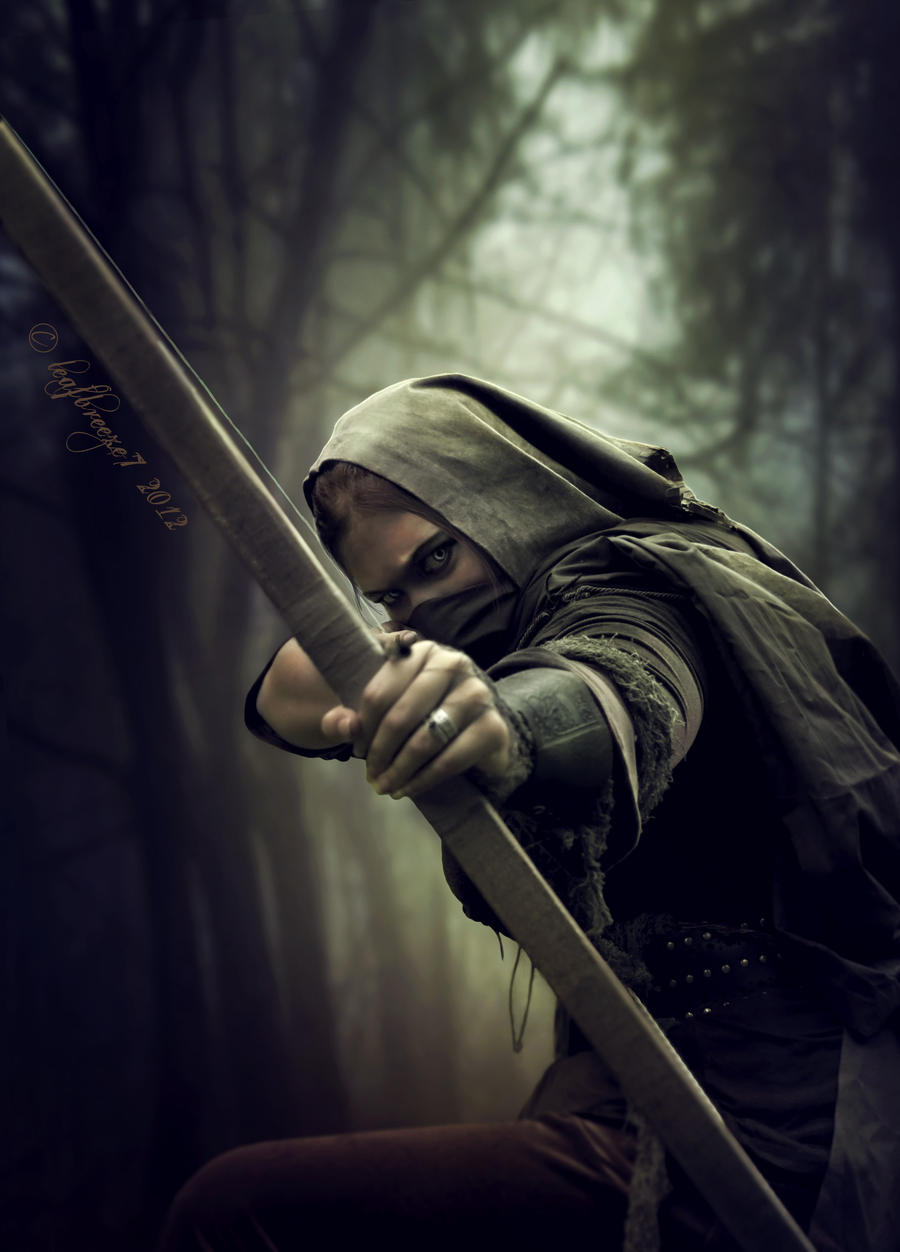
Image by leafbreeze7 on DeviantArt


This is part of a series of posts with a scene-by-scene critique, appreciation, and fan improvement of the 1986 TSR module B10, Night's Dark Terror

However long the wait, we are now at the eastern docks of Kelven in the gray dawn of 7 Thaumont (the Thyatian calendar's March), looking for Kalanos and his boat to take us upriver. But hold on a minute! Even if Eastern Karameikos is a temperate climate with little snow, and the rivers seldom freeze over, Thaumont -- "thaw month" -- should be the worst time to travel upriver. The Volaga, whose watershed is fed by mountain runoff, ought to run fast and swollen with melting snow.

Not to blame B10. It's just choosing not to apply part of the Expert D&D travel rules, which give a fixed rate for river travel, but state the movement up- or downstream may be reduced or increased, respectively, by 7-12 miles a day. River boat = 60' = 12 miles a day (close to 5th edition's 10 miles for a rowed keelboat), so strong currents can completely prevent movement upstream (and see 5th edition's rule, "These vehicles can’t be rowed against any significant current").

What's the problem with this slow pace, or even the no-current pace of 12 miles a day? For one, the timetable of the module's action requires the boat to get to Misha's Ferry, 27 miles from Kelven, by "late afternoon" on the very same day. That, plainly, is not happening. It's odd that in a module so dedicated to promoting naturalism -- "Everyday matters such as travelling long distances, finding food and shelter, and so on, need to be taken care of" -- this detail goes by the wayside.

Let's say with the current, the boat progresses 6 miles a day - we are talking late afternoon on the fifth day (11 Thaumont), or on the third if the current's disregarded. To keep up with the planned events, a better DM's choice might be to push the initial departure back to 3 or 5 Thaumont.

But before then, we have our first encounter, which should take place "a few miles upriver" of Kelven where the river narrows, and woods crowd the southern bank. It will happen in the morning if you're going at the module's motorboat speed, or midday at the more realistic pace.

It's an ambush by mysterious black-clad goons! They're hiding in "the woods on the south bank" - well, the map shows no such woods but we can assume it's a small local thicket. In a clearer failure of editing, though, their numbers are ambiguous. The text lists one figure and the stat-blocks list another. As this is only the first encounter I suggest using the less challenging numbers in the text if playing old-school rules, and the larger numbers if playing 5th edition.

First. the boat hits a chain pulled across the river, blocking the way. It's not clear how in broad daylight the boat's pilot misses seeing that chain. We can assume it is just below the waterline, enough to stop the boat's keel, with the ends secured and hidden under brush and sand on the bank. You can further set this up by remarking on the murky and turbulent water.

Then, archers in the trees open up, 80 feet away on the bank -- implying that the boat cruises up the middle of the river, the deepest spot, which is natural for a keeled boat. Also, swimmers with daggers approach to try a boarding. When they do - surprise! - one of the rowers on the boat reveals himself as an enemy agent and joins the attack.

This is a terrific setup, with many moving parts that individually look easy to handle but join into a tough tactical dilemma. The archers may pick off one or more boatmen or wound a party member (if you want to play them extra smart and cruel, have all of them target an unarmored spellcaster!) But once hidden behind the walls of the boat, the defenders are safe, unless they want to return shots. If it were just the boarders, they would be easily decimated by shooting as they approach the boat. They swim at half their movement rate by the Expert rules, so it will take four combat rounds for them to get there, or (swimming at half move but using Dash) three combat turns in 5e. The survivors, once there, lose another round in boarding. However, the suppressive archery from the bank makes both kinds of defense dangerous. The temptation is to hunker down and minimize risk until the boarders are at the boat, but then the odds shift as the agent aboard reveals himself.

Some details that are not obvious from the writing:

* The ambush is led by a higher-level goon who, as a card-carrying member of the Iron Ring bad villains club, should stay hidden and flee if failure is impending. He has a role to play in waking any archers who are felled by any sleep spells heading their way, if he is not felled himself by a lucky sleep roll, which is quite possible in Basic, less so in 5th. It is also in-character for him (but none of the minions) to have a horse ready to make a getaway.

* A DM who wants to play the minions to the fullest might consider having some of the swimmers proceed underwater and out of sight. It is completely in keeping with the ethos of their organization to have four expendable splashing guys head for the front of the boat as a distraction, while five others slip into the water behind a bush and proceed underwater to the stern. We've already established they can't see very well underwater, so they might pop up at random places within 20' of the boat.

* While the rowers are hiding and not rowing, the boat naturally drifts downstream. Working backwards from the amount it slows upriver travel, the river current is "stealing" 6 miles of travel from a 8-hour travel day (with frequent rests) in our generous interpretation, so it's running 3/4 a mile per hour, about .4 meters per second. So, drift is 8 feet per 5th edition turn (6 sec) and 12 feet per Basic D&D combat round (10 sec). This, again, makes a case for the distraction swimmers to approach from the prow (losing a round as the boat slips away) and underwater swimmers to approach the stern.

* Advancing or retreating to get off the boat might be rational. The archers will be hard to reach and their 20 arrows (or 12, if you're merciful) can last a long time. We can assume they're smart and don't shoot at hiding defenders they cannot hit. The problem with landing is that, to row or maneuver the boat to the bank, the rowers need to expose themselves, and they're paper-thin. 

* Even if the boarders and false oarsman are defeated, the encounter might end up in a stalemate as the boat drifts down the river. If the archers' cover is only a small thicket, they will want to keep to it. Eventually, the party will drift to the bank and can proceed to engage the archers.

* Terrified of their boss, the archers are likely to stand their ground in the final act of the encounter, serving as a screen even if they're out of arrows, as the leader makes his getaway. Even if one is captured, they know little of the mission, which was evidently called up when an armed group of adventurers was seen consorting with Stefan and taking passage upriver. The Iron Ring wants no interference with their plans!

* Remember, the river water is icy cold. This should reinforce that the swimmers are toughened and past caring, as they emerge from the river with gray and clammy flesh. The cold water might also test characters who happen to fall in without preparing, maybe with a few HP damage if they fail a Poison/CON save.

The aftermath of the combat is not spelled out in the writing. It's likely that several boatmen will lie dead from the combat. Worse, and especially if they're 2nd level, the less sturdy party members are at risk from the surprise archery and backstabbing thief attack. Don't sell the Iron Ring short - the agent on the boat will be out to kill. Party members may have to pull an oar to make speed if more than one rower is dead. Replacement characters can always join up, looking to cross from the north side of the river at the next encounter - Misha's Ferry.

Friday, 19 January 2024

Night's Dark Terror 1: Meeting Stephan in Kelven

This is part of a series of posts with a scene-by-scene critique, appreciation, and fan improvement of the 1986 TSR module B10, Night's Dark Terror.

Our adventure begins in the town (or is it city?) of Kelven (or is it Kelvin?) Although scholars of the Known World setting may quibble on its details, B10 as a module is self-contained, with the only necessary point of connection to other modules and world resources being the shadowy organization known as the Iron Ring. So, it's portable to other generic D&D universes with little fuss, as long as you make room on the map for its rivers, moors, and mountains.

The start, likewise, is no-nonsense: you meet A Guy in An Inn with A Job for you. Some reviewers have called out this opening as a cliche, but D&D runs on (to use kinder terms) tropes and conventions. Indeed, how an adventure begins is not as important as how it plays out. But if we're going to separate cliches from convention, what makes stock elements bad is the mindless reliance on them without regard for the reasons they are there. What makes a D&D "standard" acceptable, be it a tavern scene, a secret door, a pit trap, or a sacrificial rite, boils down to whether it makes sense in its own terms. To focus on the element that computer games call the "quest-giver," you need to answer two questions:

1. Why can't this person handle the mission themselves (or with existing associates)?
2. Why does this person trust this group of strangers?

So, meet the quest-giver.


Stephan Sukiskyn, a tall red-haired man nearing forty, an experienced warrior. Seems he needs to hire some swords to help him escort a herd of white horses that his family has captured, down one river leading to Kelven up another, ending up in the elven town of Callari. There, the elves who prize white horses as symbols of their tribe will pay top dollar for them -- enough for the guards to be offered a decent-sized flat-rate pay for the job which can be bargained up a bit. There are some advantages, though, which will become clear later on, to phrasing the reward as a percentage of the proceeds - say one in ten, bargainable up to one in seven.

Back to our questions 1 and 2. The module gives no answers, so we must supply them, through things that can emerge in conversation with Stephan.

1. The fighting personnel of the Sukiskyn homestead are about as powerful together as the party - 15 character levels, at least. So they could escort the herd if they wished. However, Stephan's brother Pyotr doesn't feel comfortable leaving the ranch nearly unguarded. The red-clothed goblins who live in the forest to the south, who usually are busy fighting other, unknown goblin tribes, have been spotted more and more in small scouting parties. Disturbingly, a goblin clad in wolfskin and riding a great wolf has also been seen, a kind not familiar to the Sukiskyns. A dose of foreshadowing for what's to come!

2. Stephan is a seasoned fighter and the clan's outside trader and diplomat. He won't give his trust blindly, but some kinds of people he has learned are right for this mission. If they are of a holy order (the family is pious, numbering two clerics among them) or an elf (for the mission ultimately is with elves) he will deal directly with them and ask them to vouch for the others. Otherwise, he "just knows" on the back of experience in dealings that the party - maybe in particular the one who has shown the most true morality in play up to this point - are to be trusted. If you have a bunch of players who enjoy being civilian-murdering shitheels, don't run them through B10. The whole front-end of the adventure assumes they are good people who want to do the right thing.

There is one more mistake in the Kelven setup. Stephan tells the party to wait a week in Kelven until the boatman Kalanos comes to ferry them upriver - and at the same time, that he will meet them in Sukiskyn in a week! Fixing this to "nine days" would be simplest. But in the adventure, hanging around in Kelven for a week accomplishes very little. The module does not detail the town, and any necessary shopping can be done in a day. There is also the question of how Stephan is traveling. If he is going on horseback, why can't the PCs also buy horses and ride with him? If by riverboat, is there really no room for 4-6 other people?

It's eventually important to the plot that Stephan does not go with the party to his homestead. Sure, realism can be tweaked to support the plot points. Kelven can be out of horses at the moment, or the boatman won't allow horses, as the module suggests; or Stephan's river boat ride can be full. But also consider (as I did in play) having Stephan ride on Kalanos' boat with the party, dropping them off at Misha's Ferry on the way. This is especially useful if you feel the first encounter might be too much for the player characters to handle. Also, including Stephan gives another reason for the villains to attack. In any event, I would shorten the waiting time to a day, so Stephan tells the party he will ride on the next morning, and the morning after that (which can still be the early spring date of 7th Thaumont - but more on that next post) Kalanos sets off from the river docks, also at dawn.

Wednesday, 17 January 2024

The Night's Dark Terror Project 0: Introduction

We're going to be talking about Basic D&D module B10, Night's Dark Terror, in the next series of posts. Written by Graeme Morris, Jim Bambra, and Phil Gallagher, and released in 1986, the module -- like X1, Isle of Dread, before it - was explicitly meant to help players transition from the dungeon delving of early levels into outdoor adventuring and the Expert level rules. As a "transition module," not only are there many paragraphs of advice and play aids for outdoor settings, but it's numbered in the B series instead of the X series -- presumably because 2nd level characters could in theory play it. The reality, as we shall see later, is something else!

X1 might be better known. It came earlier in time and shipped as part of the first Expert boxed set. But B10, in my view, has more critical acclaim surrounding it. Those who know it rave about it -- in blogs (linklinklink), in videos (linklink). The adventure is ambitious -- a mini-campaign stretching across a hundred miles. Its dozens of encounters are built around a multi-stage villainous plot together with many side-adventures. Reviews often mention the gritty naturalism worked into the setting, and that the authors were three-fifths of the design team behind Warhammer Fantasy Roleplay, which debuted the same year. It has a "Wild East" feel, with many places and characters in the sparsely settled frontier sporting Slavic-sounding names. Horse trading and rustling play a big part in the early action, not to mention an extended homestead siege. The quality of detail in the fights, settings, and treasures is way above most contemporary adventures, certainly in the B series.

And yet a few complaints keep surfacing in the reviews. In particular, we keep hearing that the adventure, for all its sandbox credentials, railroads the players at times, frustrates them at others. This is valid; I've been running a modified B10 in my group for a few months now, and because I value player agency, have had to make some plans for what happens if they go off the rails. I also think the adventure departs from naturalism in places. Or at least, from the standard I prefer, where part of exploration is not just discovering places and peoples on the map but figuring out how they operate. Because of this, I thought it would be a worthwhile blog project to go scene by scene through B10, at least until I catch up to the party in real-time, offering play notes, critique, and reworking where necessary.

Now, I have been running the adventure in 5th edition D&D, somewhat against my inclination, but this adaptation is not an aspect I'm going to cover much. There are already a couple of translations about, but owing to the players starting the adventure at 4th level and also being quite skilled at working their characters, I've had to significantly upscale many of the encounters. I'll also leave out some of the elements from the larger campaign that I've included in the plot. So, these critiques will be written about the module as it is, with the possibility that they'll be played either in B/X D&D or a related ruleset, or in 5e. Finally, I'll leave out spoilers for what's ahead in my ongoing campaign, so my players can take a look back at things they've been through and still enjoy the rest.

Onwards, to the sound of wolves howling ...

Next: Starting Off In Kelven