Sunday, 23 October 2011

Zombies: Accidia

The medieval sin of accidia (acedia), or sloth, refers to a condition that today we treat as a mental illness: depression. But more generally, the sin refers to inability to act or decide, retreat from the world rather than engagement with the world, and in its ultimate expression, suicide.

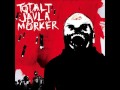
Psychological writers, such as Erich Fromm or Roy Baumeister, have identified the human motive to "escape from freedom" or "escape from the self" by submitting to authoritarian regimes or cults. When people willingly become zombies, they symbolize this abdication of will to another. This living zombie is perhaps closer to the drug-induced state of living death implicated in the questionable anthropology of Wade Davis (The Serpent and the Rainbow) than the walking dead of George Romero. It also brings to mind the philosophical zombie, which forms part of the solipsist argument (referenced in Heinlein's story "-- All You Zombies --") that we can never know for sure if anyone apart from ourselves is free-willed and conscious.

Zombies, sluggish and slavish, embody the sin of sloth when a living person willingly submits his or her body to the ritual of a necromancer. Otherwise they are mere animated corpses, a desecration but nothing more than that. Necromancers greatly prize the former kind of zombie, for their greater power, and because to recruit them gives much prestige. Therefore, necromancers and their agents often haunt popular locations for suicide - bridges, precipices - in hopes of persuading the unfortunate to surrender their lives in one sense rather than the other.

A living zombie has all stats as a regular zombie, with 4 additional HP.  It is unholy but not evil ( having given up its free will) and not undead. So, it can only be turned by reminding it of its own identity -  its personal name must be spoken, or a mirror held up to its face in place of a holy symbol. If the turning destroys the zombie, the spell is broken and the person returns to life.

As a bonus, here is a d6 table of attributes and powers that can make all kinds of zombies more scary.

1. Fingernails and teeth that break off in the wound, preventing 1 hit point of healing per wound until Cure Disease is cast.
2. If wounded down to 3 or fewer hit points, guts spill out of the zombie's abdomen and come alive. They make an extra attack ignoring armor, and if successful ensnare the arms (on an odd "to hit" roll; cannot attack until victim rolls d20+STR > 25) or legs (on an even "to hit" roll, cannot move and 2AC worse until victim rolls d20+STR > 25).
3. Zombies are immune to piercing weapons (although being stuck on a spear can hold one at bay), and take half damage (rounded down) from blunt weapons unless the wielder aims at the head with -4 to hit.
4. Zombies can only be killed by physical damage if it does 5 or more points at once.
5. Can throw its own arm, which attacks on its behalf for 1d4 damage, while the remaining arm on the zombie also attacks for 1d4.
6. Is a bloater zombie.

Friday, 21 October 2011

Evil World

In keeping with the seven deadly sins, I guess, although I'm also just going through a table I made several months ago for these genres. A little Dante, a little Bosch, a little de Sade. And a toast to Matt of Nod, and his own very tasty Inferno.

Some of the categories on the table of genres don't look as viable as they used to, so maybe there'll be a little contest coming after the coolest stuff has been exhausted...

Thursday, 20 October 2011

Seven Undeadly Sins

I'm thinking more and more that the right approach in monster-ology lies between Flame Princess' "do it yourself, do it all yourself" and conventional D&D's "here, all the monsters are in this book." In fact, my one-armed man chart from earlier in the week comes within an ace of accounting for the hit dice of most existing classic monsters, and is a good template for any others you may care to design.

But what about the stranger stuff, like undead? Well, what makes undead scary and unpredictable is their special abilities, both attack and defense. This suggests a little d6 table with possibilities for abilities that will make each encounter uncertain and memorable. After all, folklore doesn't treat ghosts as a race, but as a class of cursed beings, each with its own story.

One thing I want to do before Halloween is try a new take on the undead, using as a background the medieval church doctrine of the Seven Deadly Sins. Beyond a naturalist "ecology" of the undead, these reworkings imply a mythical symbology and moral psychology of these wretched creatures. In brief: sloth = zombies, gluttony = ghouls, envy = shadows, avarice = wights/mummies, lust = vampires, wrath = spectres/wraiths, pride = liches. Justifications to follow, especially for that one that doesn't quite seem as right as the others.

A final issue: undead-ism is most often seen as a curse transmitted unwillingly, but the more frightful possibility is that some persons desire the various states of undeath, as a means of achieving desires unavailable to living mortals. It's this potential that I think affords a new vantage point on these venerable villains.

Wednesday, 19 October 2011

Character Birth: Choice vs. Speed

Count me on the side of quick with a few choices rather than slow with a lot of choices, when it comes to generating characters for adventure games.

My One Page system cuts out an element of choice - not without some controversy as I recall -  by having class determined directly by stats which can, if necessary, be switched around once. It works choice back in, though in a relatively light way, by allowing open-ended selection of background descriptors that can have some effect on when skills work best.

Oh yeah, I changed the skills sheet some so that languages and backgrounds could fit in.  I am pretty happy now with the way backgrounds are a kind of "adjective" or "subject" that modify the base chance that the very generic skill gives you. You only get to use Knowledge to remember facts that are part of your background, and if you try using most skills in a setting or task consistent with your background you get a +2 on that (these are indicated on the new version of the character sheet, below).

I've noticed recently, though, that character generation with this system tends to bog down around skill and equipment selection.

The solution for equipment is to have random tables for weapons and standard starting armor, and to pass around a deck of cards with the six equipment packages so that the party as a whole is adequately equipped for their first expedition. That's for a future post ...

The solution for skills was simple. As I had it, players were "choosing" only a pip or two of skills to shift around their character sheet. So why not just have skills also flow from class and stats - keeping in mind that the flavor and scope of each skill in my system is modified by the freely chosen background descriptors ...

Anyway, this is what's going on the end of this sheet now.


At this point I'm a little overwhelmed by the multi-ring circus I've got going on in my free time, what with the One Page system ( a little stalled out, as I got done what I needed to run a few games with it, so the impulse to complete is kind of dormant for now ), the Genre Worlds tables, Zak giving the high sign for the Obstacles & Openings cards, and even more, including some contributions to other people's product and a big slow secret project. It will all come complete in the fullness of time, I guess.

Monday, 17 October 2011

The Old One-Armed Man's Monster Guide

How to balance the need to keep a not-always-level-appropriate environment fair to players, with the need to keep a sense of mystery about the campaign? There has to be a middle ground between the monster-book memorizers and the clueless neophytes who unwisely take on a troll.

Most of the people I've been DMing for recently are new to the hobby, and I've been trying a variety of subtle and not so subtle hints. I think one thing that might work is just a simple rule of thumb based on size, with cautions about oddball monsters and special powers. This says nothing about what kind of bestiary the DM is working with, but avoids some of the more obvious mismatches, as long as you refrain from throwing killer bunnies into the mix. By the way, fighters should also be able to size up the fighting capacities of other humans and beings with levels.

I ran out of room to mention dragons on this sheet, but there's no real need to, right?

Click to enlarge. Apologies in advance for the Bush-era color code flashbacks.

Sunday, 16 October 2011

Insect World

For every can of pesticide, there'll be a human genocide...

I see the exterminators as masked ranger-types with tanks of poison on their backs and chitin-smashing pick-hammers.

Also, slightly different choice of verbs here, which I'll go back and update the other charts with.